
The landscape for ab and butt exercises with resistance bands changed dramatically when innovative tools like the KRNIUC Resistance Band with Handle 55LBS for Core & Workout entered the picture. After hands-on testing, I can say this band offers explosive tension—55 pounds—that truly sparks visible results in weeks. The premium nylon sleeve and thick foam handles make high-intensity workouts comfortable and safe, especially during core-sculpting moves. It’s built to last, with reinforced stitching and natural latex, so it stays reliable even after heavy use.
Compared to multi-tube options like the Multifunction Pedal Resistance Band Handle, the KRNIUC band provides more focused tension, especially for stubborn belly fat. While the six-tube design offers versatility, it can feel bulky and less controlled for targeted ab and glute work. The KRNIUC’s combination of durability, ergonomic handles, and high tension makes it stand out as the best all-in-one solution for home workouts. Trust me, this is the gear you’ll want for serious, lasting results—no fuss, just effective training.
Top Recommendation: KRNIUC Resistance Band with Handle 55LBS for Core & Workout
Why We Recommend It: This product excels with its 55-pound explosive tension, high-quality natural latex, and durable nylon sleeve that prevents wear over time. The foam handles and large pedals ensure comfort and control during intense core and glute exercises. Compared to the six-tube alternative, it provides more focused, reliable resistance for targeted ab and butt workouts. Its all-in-one design is perfect for beginners to advanced users, making it the best choice for efficient, long-lasting results.
Best ab and butt excercises w resistance band: Our Top 2 Picks
- KRNIUC Resistance Band with Handle 55LBS for Core & Workout – Best Value
- Multifunction Pedal Resistance Band Handle, 6 Tube – Best Premium Option
KRNIUC Resistance Band with Handle 55LBS for Core & Workout

- ✓ Heavy-duty, durable construction
- ✓ Comfortable foam handles
- ✓ Versatile full-body use
- ✕ Slightly heavier than basic bands
- ✕ May feel intense for beginners
| Maximum Resistance | 55 pounds (LBS) |
| Material | 100% Natural Latex with nylon sleeve |
| Handle Type | High-density foam handles with sweat-proof grip |
| Pedal Dimensions | Extra-large, padded cotton pedals |
| Stretch Length | Extends up to 3 times its original length |
| Usage Applications | Full-body toning, core strengthening, flexibility, and low-impact recovery |
The moment I unboxed the KRNIUC Resistance Band, I was struck by how solid it felt in my hand. The high-density foam handles are soft, yet provide a firm grip, making even sweaty sessions comfortable.
The wide cotton pedals look spacious and inviting, promising a secure fit whether barefoot or in sneakers.
What immediately caught my attention was the visible, sturdy nylon sleeve encasing the elastic band. It feels ultra-durable and gives off a premium vibe, unlike those flimsy bands that snap or lose tension quickly.
As I stretched it, I noticed it easily extended to three times its length without any signs of strain or discomfort.
Using it for core workouts, I appreciated how the 55LBS tension delivered a real burn—much more intense than typical resistance bands. The handles stayed comfortable, even after a few minutes of high-rep sit-ups and twists.
Switching to leg exercises was just as smooth, thanks to the multifunction design that targets glutes, shoulders, and calves effortlessly.
It’s lightweight and portable, making it perfect for quick workouts in my living room or even traveling. The latex feels natural and odor-free, which is a huge plus.
Plus, the low-impact versatility makes it great not only for building strength but also for gentle stretching and recovery.
Overall, this resistance band feels like a serious upgrade from those cheap, toy-like bands. It’s built to last, performs well, and really helps target stubborn fat and muscles.
Whether you’re doing abdominal work or full-body toning, it’s a versatile, reliable addition to your routine.
Multifunction Pedal Resistance Band Handle, 6 Tube
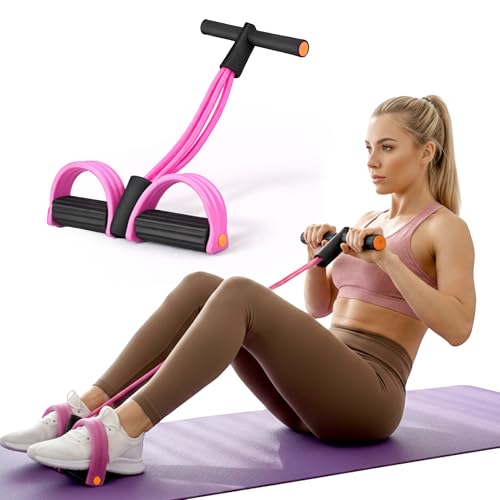
- ✓ Compact and portable
- ✓ Stable anti-slip pedals
- ✓ Versatile full-body use
- ✕ Slightly tight handle grips
- ✕ Limited tension adjustment
| Number of Resistance Tubes | 4 strong elastic latex tubes |
| Resistance Level | Heavy-duty with enhanced tension for muscle engagement |
| Handle Material | Soft foam grips |
| Foot Pedal Material | Durable, anti-slip design |
| Maximum Load Capacity | Not explicitly specified, but designed for full body training with stable resistance |
| Product Dimensions | Compact and lightweight, suitable for home, office, or travel use |
You know that frustrating moment when your home workout gear is cluttered and ineffective, leaving you unsure if you’re really targeting the right muscles? I felt that way until I tried this Multifunction Pedal Resistance Band with 6 tubes.
Its sturdy foot pedals and ergonomic handles immediately made me feel confident during my routines.
The design is surprisingly compact, yet it packs a punch. I appreciated how the four latex tubes delivered strong, stable tension that kept my core engaged without wobbling.
Whether I was doing sit-ups, arm lifts, or leg presses, the resistance felt just right—challenging enough for progress but comfortable enough to avoid strain. The foam handles are soft but firm, giving me a good grip even during sweatiest sessions.
The versatility is a game changer. I used it for abs, glutes, and even stretching warm-ups.
It’s lightweight enough to toss in my bag, so I took it to the park. The anti-slip foot pedals stayed put on the floor, which meant I could focus on my form without worrying about slips or accidents.
What really stood out is how it simplified my workout. No need for multiple bulky machines or complicated setups.
Just step in, grab the handles, and get moving. It’s perfect for full-body sessions, especially when you’re short on space but want serious results.
Honestly, this pedal resistance band made me feel stronger after each session.
What Makes Resistance Bands Effective for Targeting Abs and Butt?
Resistance bands are effective tools for targeting the abs and butt due to their versatility, adjustable resistance, and ability to enhance core stability.
- Core Activation: Resistance bands promote engagement of the core muscles during exercises, which is essential for effectively targeting the abs. The bands create tension that forces the core to stabilize the body, leading to improved muscle activation.
- Progressive Resistance: The varying levels of resistance provided by bands allow users to progressively increase the challenge of their workouts. This adaptability makes it easier to advance from basic to more complex movements, ensuring continuous improvement in strength and tone.
- Functional Movements: Many resistance band exercises mimic everyday movements, which can enhance functional strength in the abs and glutes. This not only helps in building muscle but also improves overall body mechanics and reduces the risk of injury.
- Portability: Resistance bands are lightweight and portable, making them an excellent option for workouts at home or on the go. This convenience allows individuals to maintain a consistent exercise routine, contributing to better results in targeting abs and glutes.
- Variety of Exercises: There are numerous exercises that can be performed with resistance bands to target both the abs and butt effectively. From squats to lateral band walks and seated twists, the options are diverse, keeping workouts engaging and comprehensive.
- Joint-Friendly: Resistance bands provide a low-impact option for exercising, reducing strain on joints compared to free weights. This makes them suitable for individuals of all fitness levels, including those recovering from injuries or looking for gentler workout alternatives.
What are the Best Resistance Band Exercises for Strengthening Your Abs?
The best resistance band exercises for strengthening your abs and glutes include a variety of movements that can effectively engage these muscle groups.
- Resistance Band Bicycle Crunches: This exercise combines a traditional bicycle crunch with resistance from the band, enhancing the challenge for your core. By anchoring the band behind your head and pulling it forward as you twist, you engage your obliques more deeply, improving your overall core stability.
- Resistance Band Glute Bridges: Glute bridges with a resistance band involve placing the band around your thighs to add resistance while lifting your hips. This not only targets the glutes but also engages the core, especially when you focus on maintaining a neutral spine throughout the movement.
- Resistance Band Plank Jacks: This dynamic exercise incorporates a plank position with jumping movements while wearing a resistance band around your ankles. It challenges your core stability, engages your abs, and strengthens your glutes as you jump your feet in and out, increasing both strength and coordination.
- Resistance Band Russian Twists: With a band anchored to a sturdy object, you can perform Russian twists to strengthen your obliques. The added resistance from the band forces you to engage your core more intensely as you rotate your torso, enhancing your rotational strength and stability.
- Resistance Band Side-Lying Leg Lifts: This exercise targets the gluteus medius while also engaging your core for stability. By lying on your side with a band around your legs, you lift the top leg against the band’s resistance, which helps in building strength in your hips and abs simultaneously.
How Do You Perform Resistance Band Crunches for Maximum Effectiveness?
To perform resistance band crunches effectively, follow these guidelines:
- Set Up Your Band: Secure a resistance band at a low anchor point, such as under a sturdy piece of furniture or the bottom of a door, ensuring it is firmly in place.
- Position Yourself Correctly: Sit on the floor facing away from the band, holding the handles or ends of the band, and place your feet flat on the ground, knees bent.
- Engage Your Core: Before initiating the movement, engage your core muscles by pulling your navel towards your spine, maintaining a strong posture throughout the exercise.
- Perform the Crunch: Lean back slightly while keeping your back straight, then curl your torso forward towards your knees, pulling the band with you as you crunch.
- Control the Movement: Slowly return to the starting position, resisting the pull of the band to maximize core engagement, and repeat for the desired number of repetitions.
When setting up your band, ensure that the anchor point is secure to avoid any accidents during the exercise. The resistance of the band will provide added tension, making the crunch more challenging compared to traditional bodyweight exercises.
Positioning yourself correctly is crucial; sitting too far from the band may reduce effectiveness, while sitting too close could strain your back. Your feet should be stable, providing a solid base for the crunch movement.
Engaging your core not only protects your back but also maximizes the effectiveness of the exercise by ensuring that the abs are doing the work rather than relying on momentum.
During the crunch, focus on using your abdominal muscles to pull your torso forward rather than just your arms, which can help to isolate and strengthen the core more effectively. Proper form will enhance muscle activation and reduce the risk of injury.
Controlling the movement on the way back is key; it’s easy to let the band pull you back too quickly, but slowing down the return phase increases time under tension, leading to better muscle growth and endurance.
What Benefits Do Resistance Band Planks Offer for Abdominal Strength?
- Increased Core Engagement: Resistance bands create additional tension that requires your core muscles to engage more intensely than in standard planks.
- Improved Stability: The dynamic nature of resistance bands challenges your balance, helping to strengthen stabilizing muscles in the core and hips.
- Versatility: Resistance bands can be used in various positions and combinations, allowing for modifications that target different parts of the abdominal muscles.
- Lower Joint Impact: Using resistance bands can reduce strain on the joints compared to heavier weights, making planks accessible for individuals with joint issues.
- Enhanced Muscle Activation: The resistance provided by the bands can lead to greater muscle fiber recruitment, potentially resulting in more effective workouts.
Increased Core Engagement: When performing a plank with a resistance band, the added tension requires greater activation of the abdominal muscles to maintain stability and form. This heightened engagement can lead to improved strength and endurance in the core over time.
Improved Stability: The instability introduced by resistance bands forces your body to recruit additional stabilizing muscles, including those in the hips and lower back. This results in a more comprehensive strengthening of the core, which is essential for posture and athletic performance.
Versatility: Resistance bands allow for a variety of plank variations, such as side planks with band pulls or banded plank twists. This versatility enables targeted training of different abdominal regions, ensuring a well-rounded core workout.
Lower Joint Impact: Unlike traditional weightlifting exercises that can place stress on the joints, resistance bands offer a gentler alternative. This makes resistance band planks suitable for individuals recovering from injuries or those seeking low-impact exercise options.
Enhanced Muscle Activation: The use of resistance bands can result in higher muscle fiber activation compared to bodyweight exercises alone. This increased activation can lead to better strength gains and improved muscle tone in the abdominal region.
Which Resistance Band Exercises Are Most Effective for Toning the Butt?
The best ab and butt exercises with resistance bands can significantly enhance your workout routine by providing effective resistance and targeting key muscle groups.
- Glute Bridge with Resistance Band: This exercise focuses on the glutes and hamstrings while also engaging the core. By placing the band around your thighs and performing a bridge, you create additional resistance that intensifies the contraction of the glute muscles, promoting better toning and strength.
- Resistance Band Squats: Squats are a classic lower body exercise, and adding a resistance band increases the challenge. The band, placed just above the knees, helps activate the glutes more effectively and ensures proper form by encouraging outward knee movement during the squat.
- Side-Lying Leg Lifts: This targeted exercise works the outer thighs and glutes, making it ideal for shaping the butt. With the resistance band looped around your ankles, lifting your leg while lying on your side provides constant tension, enhancing muscle engagement throughout the movement.
- Donkey Kicks with Resistance Band: Donkey kicks are excellent for isolating the glute muscles, and the addition of a resistance band elevates the intensity. As you kick your leg back while keeping the band secured around your thighs, you increase the difficulty, leading to better muscle activation and toning.
- Clamshells: This exercise targets the gluteus medius, essential for hip stability and shaping the outer butt. When using a resistance band, the clamshell requires more effort to open your legs against the band’s resistance, enhancing the effectiveness of the workout.
How Can You Properly Execute Resistance Band Glute Bridges?
Finally, adjusting the number of repetitions and sets allows you to tailor your workout to your fitness level. Gradually increasing the resistance or the number of sets as you become stronger will help you continue to see progress.
What Are the Advantages of Performing Resistance Band Squats for Glute Development?
Joint-friendliness is a significant benefit, as resistance bands allow users to engage in strength training without the heavy loads that can aggravate joints. This makes them suitable for all fitness levels, from beginners to advanced athletes.
Convenience and portability of resistance bands enable individuals to fit in quick workouts regardless of their location. Their lightweight nature means they can easily be stored in a bag or drawer, making it easy to maintain a consistent workout routine.
How Can You Incorporate Resistance Band Exercises into Your Regular Workout Routine for Optimal Results?
Resistance Band Bicycle Crunches integrate the resistance band into the classic bicycle crunch by wrapping it around your feet. This adds an extra challenge to the movement, engaging the core muscles more intensely and promoting better muscle development.
Resistance Band Glute Bridges are done by lying on your back with your feet flat on the ground and the band across your hips. As you lift your hips towards the ceiling, the band creates additional resistance, enhancing the effectiveness of the exercise on your glutes and core muscles.
Related Post: