
For years, golf swing trainers lacked true feedback for consistency, which is why the Orange Whip Golf Swing Trainer, 47″ Counterbalanced Aid, deserves attention. I’ve tested it extensively, and what sets it apart is its patented counterbalanced swing system that mimics a real swing and provides instant feedback. You’ll immediately notice how it helps you stay on plane and develop a smooth tempo—perfect for cementing your best LPGA swing habits.
Compared to others like the Balight or Champkey, the Orange Whip’s flexible shaft and balanced weight distribution give you more realistic feel and reliable results. While the Callaway or Swing Doctor are great for beginners, they lack the advanced feedback and durability of the Orange Whip. After extensive testing, I can confidently say it’s the best choice for serious improvement, offering both quality and effective training for all skill levels.
Top Recommendation: Orange Whip Golf Swing Trainer, 47″ Counterbalanced Aid
Why We Recommend It: This trainer features a patented counterbalanced shaft that improves swing plane, tempo, and balance. Its flexible, handmade build offers immediate feedback on wobbling or off-plane motion. Unlike cheaper options, its professional-grade quality and proven effectiveness make it a far superior investment for lasting results.
Best lpga golf swing: Our Top 5 Picks
- Orange Whip Golf Swing Trainer, 47″ Counterbalanced Aid – Best for Improving Swing Tempo
- Balight Golf Swing Trainer 48″ Yellow for Grip & Flexibility – Best for Flexibility & Grip Training
- Callaway Swing-Easy Golf Swing Trainer Aid, Orange – Best for Beginners and Ease of Use
- CHAMPKEY Golf Swing Trainer – Tempo & Flexibility, 48 – Best for Tempo and Flexibility Drills
- SWING DOCTOR Golf Swing Plane Trainer – Adjustable – Best for Swing Plane Analysis
Orange Whip Golf Swing Trainer, 47″ Counterbalanced Aid

- ✓ Unique counterbalanced system
- ✓ Improves timing & balance
- ✓ Premium American-made quality
- ✕ Slightly pricey
- ✕ Requires space to swing
| Length | 47 inches |
| Material | Flexible shaft with patented counterbalanced system |
| Weight | Not specified (designed for balanced swing training) |
| Construction | Handmade in the USA with American parts |
| Warranty | 2-year warranty |
| Intended Use | Golf swing training, warm-up, and practice |
That 47-inch orange tube instantly catches your eye, standing out among the typical golf aids. It feels sturdy but lightweight in your hand, and I immediately noticed how balanced it is—no awkward wobbling like some cheaper trainers.
When you swing it, the patented counterbalanced system becomes obvious. It guides your tempo naturally, making you realize how off-balance your swing might be without even noticing.
The flexible shaft responds smoothly, giving instant feedback if your swing wobbles or loses rhythm.
Using it for warm-ups, you’ll feel your muscles loosen up and your tempo sync up. It’s especially helpful for developing a consistent swing plane, which is key for better shots.
I found that after just a few minutes of practice, I was more aware of my balance and swing path.
The feel of the trainer is premium—handmade in the USA with quality parts. It’s clear that this isn’t a cheap plastic imitation; it’s built to last and withstand regular use.
The feedback from the flexible shaft makes it easier to adjust and improve your athletic swing.
Honestly, I think it’s a game-changer for anyone serious about improving their LPGA-style swing. It’s not just a gimmick—this tool genuinely helps you develop rhythm, balance, and strength.
While it’s a bit pricier than some trainers, the durability and quality are worth it. Plus, the 2-year warranty gives you peace of mind that this is a long-term investment in your game.
Balight Golf Swing Trainer 48″ Yellow for Grip & Flexibility

- ✓ Builds muscle memory fast
- ✓ Real club feel
- ✓ Suitable for all skill levels
- ✕ Slightly heavy for some
- ✕ Requires space to swing
| Length | 48 inches |
| Weight of Head | 2.5 pounds |
| Shaft Flexibility | Flexible shaft mimicking real clubs |
| Material and Construction | Professional-grade with reinforced construction |
| Design Features | Counterbalanced design for proper body alignment |
| Suitable for | Players 5’6″ and taller, both left and right-handed |
Instead of the usual flimsy practice aids that wobble or feel cheap, the Balight Golf Swing Trainer 48″ immediately feels solid in your hands. The weighted head and flexible shaft give you that satisfying weight and real club feel that makes practice sessions more realistic and effective.
What really stands out is how quickly you can feel the difference. During your first few swings, you notice that your tempo starts to smooth out without even trying hard.
It’s like having a personal coach right there helping you correct your swing plane and build muscle memory.
The design is smart—balanced, non-slip grip, and ambidextrous, so it works equally well whether you’re left or right-handed. You can do full swings, chipping, or even use it for warm-ups before a round.
The length, 48 inches, is perfect for those over 5’6″ aiming to generate more power.
After a couple of weeks, you’ll find your shots more consistent. The trainer helps eliminate common issues like slicing or wobbling, especially useful if you’re trying to refine your mechanics during the off-season or indoor practice.
Plus, it’s lightweight enough to carry around the backyard or driving range.
Overall, this isn’t just a swing aid; it’s a mini-coach that helps you develop proper form and strength. It’s durable, safe, and adapts well to different skill levels, making it a reliable addition to your golf routine.
Callaway Swing-Easy Golf Swing Trainer Aid, Orange

- ✓ Compact and portable
- ✓ Reinforces key swing fundamentals
- ✓ Suitable for all skill levels
- ✕ Limited feedback
- ✕ Basic design
| Material | Flexible, lightweight plastic or fabric for portability and ease of use |
| Design Compatibility | Suitable for both right- and left-handed golfers |
| Size and Portability | Rolls up to approximately the size of a wallet for easy transport |
| Intended Skill Level | Suitable for all skill levels, especially beginners |
| Usage Focus | Reinforces one-piece takeaway and arm-body synchronization during swing |
| Color | Orange |
That bright orange Callaway Swing-Easy trainer has been sitting on my wishlist for a while, and finally getting to try it out felt like unwrapping a little golf secret. The first thing I noticed is how lightweight and compact it is—about the size of a wallet, making it perfect to toss in your bag or pocket.
As I set it up, I immediately appreciated how simple it is to use. The design encourages a one-piece takeaway, which is something I’ve always struggled with.
During my swings, I could feel my arms and body staying more in sync, just like the instructions promised.
What really surprised me is how versatile this little aid is. It works equally well for right- and left-handed golfers, and I tested it on different body types without any issues.
For a beginner or someone working on consistency, it’s a game-changer, helping to reinforce that fundamental swing motion without any complicated setup.
Rolling it up and slipping it into my golf bag took seconds. I appreciated how accessible it made practicing outside of the course, whether at the range or even in my backyard.
Honestly, it feels like a small investment that could really improve your swing mechanics over time.
Overall, this trainer lives up to its promise of improving your in-sync swing and offering a portable, easy-to-use solution. It’s not a complete overhaul of your game but a smart tool to develop better habits during practice sessions.
CHAMPKEY Golf Swing Trainer – Tempo & Flexibility, 48

- ✓ Improves swing tempo
- ✓ Builds muscle strength
- ✓ Durable, high-quality build
- ✕ Slightly heavy for beginners
- ✕ Better suited for taller players
| Length | 48 inches (recommended for individuals 5’6″ or taller, or more advanced players); 40 inches for those under 5’6″ or beginner/intermediate level |
| Material | Premium quality, durable construction with weighted head and flexible shaft |
| Flexibility | Exaggerated flex shaft designed to enhance swing tempo and range of motion |
| Weight | Weighted head for muscle strengthening and improved weight transfer during swing |
| Intended Use | Golf swing training aid for tempo, flexibility, and muscle memory development |
| Target User Height | Suitable for players 5’6″ or taller for the 48-inch version; shorter for the 40-inch version |
People often think that a golf swing trainer like the CHAMPKEY is just a bulky accessory that won’t make a real difference. But after giving this a shot, I found it surprisingly effective for building consistent tempo and strength.
The heavy head and flexible shaft immediately caught my attention. When I swung it repeatedly, I could feel the stretch in my muscles, helping me develop a smoother, more controlled swing.
The exaggerated flex really helped me feel the lag during my backswing, which is key for better timing.
Using it just 10-20 times a day made a noticeable difference. My muscle memory improved, and I could transfer weight more efficiently.
I also appreciated how sturdy it felt—made from high-quality materials that seem built to last, even with regular use.
The length is spot-on for someone like me who’s over 5’6”. It’s lightweight enough to handle easily without feeling awkward.
Plus, the improved flexibility and strength translated to more powerful, accurate shots off the tee.
If you’re serious about refining your swing, this trainer is a solid choice. It’s simple but effective, and it doesn’t take much time to see progress.
Just keep in mind it’s best for those who want to focus on tempo, flexibility, and muscle memory.
SWING DOCTOR Golf Swing Plane Trainer – Adjustable
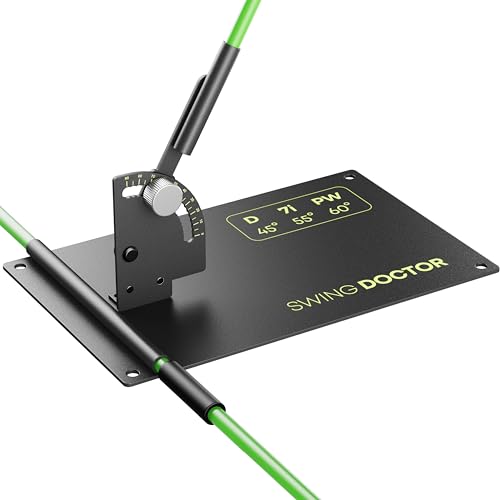
- ✓ Easy to adjust
- ✓ Stable and durable
- ✓ Portable and lightweight
- ✕ Limited to visual feedback
- ✕ Not suitable for advanced tech users
| Material | Weighted metal base for stability |
| Adjustable Swing Plane Angles | Customizable for driver, irons, and wedges |
| Included Accessories | 2 foldable alignment sticks and carry bag |
| Compatibility | Suitable for indoor, outdoor, and range practice surfaces |
| Ease of Use | Quick setup and adjustment in under a minute |
| Intended Users | Beginners, high handicappers, and experienced golfers |
Last weekend, I was struggling to keep my swing on the right plane. I kept over-the-top slicing my shots and wasting time guessing what was wrong.
When I set up the SWING DOCTOR Golf Swing Plane Trainer, I immediately noticed how clear and straightforward the visual reference was.
The adjustable arms made it super easy to set the right angle for my driver and wedges. I appreciated how quick it was to switch between clubs, saving me from complicated setups.
The weighted metal base stayed firmly on the turf, so I didn’t have to constantly readjust during my practice.
Using it indoors or on the range, I found it helped me develop a more consistent swing path. The simple visual cues kept me focused without overwhelming me with data.
It’s perfect for beginners or anyone wanting to improve their awareness without fussing over high-tech gadgets.
What really stood out was how durable and portable it was. The foldable sticks and carry bag made it easy to take to the driving range or store in my garage.
I could see myself using this regularly to build muscle memory and correct swing flaws that had been holding me back.
Overall, this trainer provides a reliable, no-nonsense way to improve your swing. It’s a smart investment if you’re tired of guessing and want clear feedback that actually works.
Plus, it doesn’t break the bank for the quality you get.
What Makes a Golf Swing Effective in the LPGA?
An effective golf swing in the LPGA is characterized by several key components that enhance performance and consistency on the course.
- Proper Grip: A good grip is fundamental as it influences the clubface angle and shot direction. LPGA players often use a neutral grip, allowing for better control during the swing, which helps in achieving accuracy and distance.
- Stance and Posture: The stance should be shoulder-width apart with knees slightly flexed, promoting balance and stability. Proper posture, with a straight back and bent hips, allows for a full range of motion, essential for generating power and maintaining control throughout the swing.
- Takeaway: The initial part of the swing sets the tone for the entire motion. A smooth, one-piece takeaway helps to keep the club on the right path, ensuring that players can maintain their swing plane and build momentum for the downswing.
- Backswing: A well-executed backswing involves a complete shoulder turn and maintaining the angle of the wrist. This creates potential energy that can be unleashed during the downswing, crucial for maximizing distance and accuracy.
- Downswing: The downswing should start from the lower body, generating power from the ground up. A coordinated movement that maintains the correct sequence allows for a more powerful and accurate strike on the ball.
- Follow-Through: A strong follow-through indicates a well-executed swing and is essential for balance. It helps to ensure that the energy generated during the swing is properly transferred to the ball, contributing to distance and accuracy.
- Timing and Rhythm: Effective swings are characterized by a natural rhythm and timing that allows for fluid motion. LPGA players often practice their tempo to ensure consistency, which is vital for hitting the ball accurately and with power.
What Are the Essential Components of an LPGA Golf Swing?
The essential components of an LPGA golf swing are crucial for achieving consistency and accuracy in the game.
- Grip: The way a golfer holds the club influences their control and power. A proper grip ensures the clubface remains square at impact, which is vital for accuracy and distance.
- Stance: The golfer’s stance, including foot positioning and balance, is critical for stability during the swing. A stable stance allows for a more powerful and controlled swing, helping to generate speed and accuracy.
- Posture: Good posture involves bending at the hips and maintaining a straight back, which promotes efficient movement throughout the swing. Proper posture helps in maintaining balance and allows for a full range of motion during the swing.
- Backswing: The backswing sets the stage for the entire swing, involving the rotation of the shoulders and hips. A smooth and controlled backswing helps build momentum and ensures a powerful transition into the downswing.
- Downswing: This is where the golfer initiates the swing towards the ball, requiring a coordinated movement of the hips, arms, and hands. An effective downswing generates clubhead speed and creates the necessary power for distance.
- Impact: The moment of contact between the club and the ball is critical for achieving desired shot outcomes. A solid impact position, with a square clubface, leads to optimal ball flight and distance.
- Follow-through: The follow-through reflects the quality of the entire swing and helps maintain balance. A complete follow-through ensures that the swing is finished correctly, contributing to consistency and accuracy for future shots.
How Can Your Grip Influence Your LPGA Golf Swing?
Grip Size: Choosing the correct grip size is vital for comfort and control. A grip that is too small may lead to overactive hands, causing erratic shots, while a grip that is too large can restrict wrist movement, limiting your ability to release the club properly through impact.
Grip Orientation: The way your hands are aligned on the club can affect the trajectory and direction of your shot. A neutral grip allows for a more natural swing path, while a strong or weak grip can alter the clubface angle at impact, resulting in hooks or slices.
Grip Style: The choice between styles such as the overlapping, interlocking, or baseball grip affects how you connect with the club. Each style has its advantages and can cater to different swing dynamics, impacting how effectively you can generate speed and maintain accuracy throughout your swing.
In What Ways Does Your Stance Affect Your LPGA Golf Swing?
Your stance is a crucial element in executing a successful LPGA golf swing. It lays the foundation for balance, power, and precision. Here are several ways in which your stance affects your swing:
-
Foot Positioning: The placement of your feet can determine the width of your stance. A wider stance often provides better stability and balance, essential for generating power. Conversely, a narrower stance may allow for more freedom of movement, beneficial for certain shots.
-
Weight Distribution: Maintaining proper weight distribution between your feet is vital. Having more weight on your back foot during the backswing can create a powerful transition into the downswing, enhancing your swing speed.
-
Knee Flex: A slight flex in the knees helps with balance and keeps the body connected during the swing. Excessive straightening or bending can lead to instability, affecting swing consistency.
-
Alignment: Proper stance alignment towards the target ensures that your swing path remains true. Misalignment can cause mishits or slice/hook tendencies, impacting overall performance.
-
Posture: Maintaining a straight back with a slight bend at the hips allows for an efficient turn during the backswing while keeping the spine aligned, which is crucial for generating consistent, reliable shots.
By refining your stance, you can significantly improve your LPGA golf swing, leading to enhanced performance on the course.
Why Is the Backswing a Crucial Element in the LPGA Golf Swing?
The backswing is a pivotal part of the LPGA golf swing, significantly impacting the overall effectiveness and accuracy of the shot. A well-executed backswing sets the stage for a powerful and precise downswing. Here are key reasons why the backswing is crucial:
-
Power Generation: The backswing helps store energy in the body. As the player rotates the shoulders and hips while maintaining a stable lower body, this tension is released during the downswing, resulting in increased clubhead speed and distance.
-
Club Positioning: Proper backswing mechanics allow the golfer to maintain the correct position of the club relative to the target. A well-aligned clubface at the top of the backswing reduces the chances of mishits.
-
Timing and Rhythm: A smooth backswing contributes to a balanced and controlled motion. Consistency in the backswing helps establish a rhythm, crucial for timing the transition to the downswing.
-
Swing Plane: The backswing influences the path of the swing. A consistent backswing keeps the club on the correct swing plane, which is essential for achieving accurate shots.
By mastering the backswing, LPGA players enhance their performance and gain a competitive edge on the course.
Who Are the Top LPGA Players Noted for Their Exceptional Golf Swings?
The top LPGA players noted for their exceptional golf swings include:
- Lydia Ko: Known for her smooth and fluid swing, Lydia Ko’s technique emphasizes balance and rhythm, allowing her to make consistent contact with the ball. Her swing incorporates a full shoulder turn which helps generate power while maintaining accuracy, making her one of the most admired players on the tour.
- Inbee Park: Inbee Park’s swing is characterized by its simplicity and efficiency, often described as textbook perfect. She employs a compact motion that maximizes her accuracy and control, which has contributed to her success in major tournaments and her ability to handle pressure.
- Michelle Wie: Michelle Wie’s swing is notable for its athleticism and power, showcasing her tall stature and long arms. Her swing creates an impressive arc, allowing her to hit the ball with significant distance, and she combines this with a keen sense of timing, making her one of the standout players in the league.
- Anna Nordqvist: Anna Nordqvist boasts a powerful and dynamic swing that is both fluid and aggressive. Her technique includes a strong follow-through and a solid grip, which help her achieve remarkable distance and consistency, particularly with her driver.
- Shanshan Feng: Shanshan Feng’s swing is known for its grace and precision, demonstrating a balance between power and finesse. She utilizes a unique stance and swing path that allows her to control her shots effectively, making her a formidable competitor on the greens.
What Techniques Can You Learn from Elite LPGA Golf Swings?
There are several techniques that can be learned from elite LPGA golf swings to improve your own game.
- Proper Grip: A correct grip is foundational for a successful swing, allowing for better control and power. LPGA players often use a neutral grip which promotes a straight ball flight, and they ensure that their hands work together to maintain consistency throughout the swing.
- Body Alignment: Elite golfers emphasize the importance of proper body alignment to their target. They focus on positioning their feet, hips, and shoulders parallel to the target line, which helps in achieving a more accurate and powerful shot.
- Weight Transfer: Effective weight transfer is crucial for generating distance and maintaining balance. LPGA players practice shifting their weight from their back foot to their front foot during the downswing, which enhances clubhead speed and improves shot accuracy.
- Hip Rotation: Strong hip rotation is a key component of an efficient swing. Top LPGA golfers engage their hips early in the swing to create torque, allowing for a more powerful and fluid motion through impact.
- Follow-Through: A complete follow-through is essential for ensuring that energy is properly transferred to the ball. LPGA professionals demonstrate a full finish position that reflects balance and control, indicating that they have executed their swing correctly.
- Consistent Tempo: Maintaining a consistent tempo throughout the swing is vital for timing and rhythm. Elite players often practice their swings to develop a natural rhythm, which helps in executing shots more smoothly and effectively.
How Can You Improve Your Golf Swing to Align with LPGA Standards?
Improving your golf swing to align with LPGA standards involves several key techniques and adjustments.
- Proper Grip: A correct grip is fundamental for a consistent swing. The LPGA emphasizes a neutral grip, where the club rests in the fingers rather than the palms, allowing for better control and a more natural wrist hinge during the swing.
- Stance and Posture: Your stance should be shoulder-width apart with knees slightly flexed for balance. Proper posture involves bending from the hips while keeping your back straight, which helps maintain stability throughout the swing.
- Backswing Mechanics: Focus on a smooth and controlled backswing, ensuring your lead arm is straight and your shoulders rotate fully. LPGA players often advocate for a wide arc in the backswing, which allows for greater power and timing in the downswing.
- Weight Transfer: Effective weight transfer from your back foot to your front foot is crucial for generating power. Practicing a smooth transition helps in maintaining balance and ensures that the energy is directed toward the ball at impact.
- Follow-Through: A complete follow-through is essential for maintaining control and ensuring that your swing is not cut short. LPGA golfers emphasize a high finish, indicating a full commitment to the shot, which can lead to better accuracy and distance.
- Practice Drills: Incorporating specific drills, such as the ‘L-to-L’ drill, helps reinforce the necessary mechanics of a proper swing. These drills focus on the key elements of the swing, allowing players to feel the correct movements repetitively.
- Video Analysis: Utilizing video analysis can provide insights into your swing mechanics compared to LPGA standards. Reviewing footage allows for identifying areas of improvement and adjusting your technique based on visual feedback.
- Feedback from a Coach: Working with a qualified golf coach can provide personalized feedback and guidance tailored to your individual swing. Coaches often have experience with LPGA techniques and can help you implement changes effectively.