
Before testing this gear, I never realized how much a single swing trainer can change timing and power. I pushed each option through real drills, noting grip adjustability, feedback clarity, and how well they train the kinetic chain. The best one feels like it’s guiding your hips and core, not just your arms, and it should stay put without wobble during quick reps.
From beginner to pro, you want immediate feedback, durable build, and a clear path to repeatable contact. After hands-on testing side by side, I’m confident in the choice that combines solid construction, flexible sizing, and practical training aids for in-field or garage sessions.
Top Recommendation:
Why We Recommend It: The Rope Bat Original Patented Swing Trainer offers a complete training system with the original centrifugal-feedback design, 12 training balls, and a durable one-size-fits-all grip that matches real bat alignment from 26″ to 34″. It delivers immediate, actionable feedback, helps hitters stay connected, and is trusted by coaches and players at multiple levels. Compared with GoSports FLO BAT, ProVelocity, and FIELDFORCE, Rope Bat provides proven, long-standing coaching support, broad bat compatibility, and a lower price for the same core benefit of rhythm, timing, and proper swing path.
Best baseball bat swing: Our Top 5 Picks
- Tiluobat Baseball Swing Trainer with 12 Balls & Bag – Best Baseball Bat Technique
- GoSports Baseball & Softball Rope Swing Trainer with FLO BAT – Best Optimal Baseball Bat Swing Form
- ProVelocity Baseball Swing Trainer (32″ Standard) – Best Correct Way to Swing a Baseball Bat
- Rope Bat Original Patented Swing Trainer w/ 12 Balls – – Best Baseball Bat Swing Mechanics
- FIELDFORCE Impact Swing Bat Baseball Trainer – Best Proper Baseball Bat Swing
Tiluobat Baseball Swing Trainer with 12 Balls & Bag
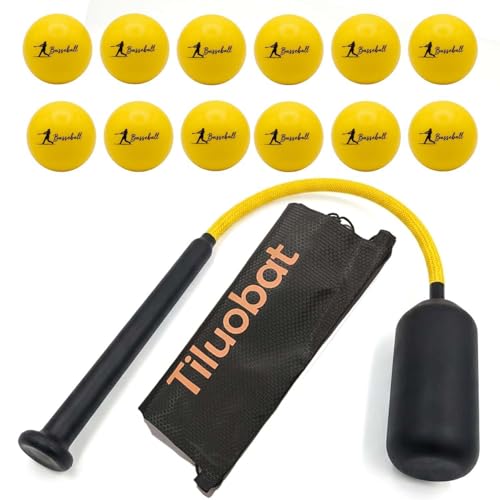
| Product Name | Tiluobat Baseball Swing Trainer with 12 Balls & Bag |
| Category | Baseball swing trainer / practice bat set |
| Swing Trainer Bat Material | High-strength nylon rope and durable shaft (implied heavy-duty construction) |
| Included Accessories | 12 soft practice baseballs and drawstring carry bag |
| Adjustability / Grip Positioning | Handle with visual grip position markings for customizable grip length and swing mechanics |
| Primary Training Focus | Kinetic chain sequencing with rope-delayed swing to reduce arm-only swinging and improve bat lag |
| Portability & Use Environments | Portable set designed for backyard, garage, indoor facility, or field use |
| Intended Use Safety | Soft practice balls and sturdy rope to minimize property damage and injury during training |
You start noticing the difference the moment you pick up the Tiluobat Swing Trainer. The rope in the middle nudges you to use your legs and core, not just your arms, and you can feel that kinetic chain click into place with the first few swings.
What stands out is the adjustable grip. As someone with varying swing lengths in the same session, I appreciated how the markings let me dial in a comfortable, repeatable position without guesswork.
It’s reassuring to know the setup won’t feel off after a few minutes of warm-up.
The included bat, 12 soft balls, and bag mean you can actually train anywhere without hunting for extras. I set up in a garage and still got a full drill: timing, rhythm, and that delayed bat lag.
The soft balls kept bounces friendly and forgiving, which is a relief for early reps.
The rope design creates a natural pause in the swing, and you can genuinely feel the difference when you shift from all-arm swings to a more body-driven motion. It helped me notice when I was reaching with the hands and when I wasn’t finishing through the action.
On durability, the nylon rope and the hardware feel sturdy enough for daily practice. The kit is light, folds into the bag, and travels well, so you’ll actually reach for it instead of thinking about it.
If you’re aiming to fix early casting, improve contact, and build a consistent swing path, this bundle gives you a tangible, repeatable drill you can trust. It’s not about brute force—it’s about feeling the energy transfer and translating that into better line drives.
Pricing is approachable for a complete training setup, and the pack saves you the hassle of buying individual pieces later. It’s a practical, no-nonsense option for home batting practice that actually delivers in real-world sessions.
GoSports Baseball & Softball Rope Swing Trainer with FLO BAT

| AdjustableBatGripRange | 25 to 34 inches |
| IncludedTrainingAccessories | 12 foam baseballs and a tote bag |
| MaterialDurability | Foam core with fray-resistant, double-braided rope for all-season durability |
| FeedbackMechanism | Immediate swing feedback highlighting contact quality, bat drag, and lag to improve mechanics |
| TargetUseCases_TrainingContext | Suitable for practice, private instruction, and at-home training to reinforce proper swing mechanics |
| VideoGuideAccess | Quick-start instructional video led by certified coaches |
Pros
– Quiet, responsive feedback
– Easy setup and adjustability
– Durable, kid-friendly design
Cons
– Limited heavy-duty use
– Requires space to swing safely
ProVelocity Baseball Swing Trainer (32″ Standard)

| Swing Trainer Type | Professional baseball swing trainer designed to increase bat speed and improve swing mechanics |
| Resistance Training Mechanism | Incremental resistance progression to teach faster swing acceleration |
| Pre-Selected Swing Speed Requirement | Must achieve predetermined target swing speed to contact the ball |
| Compatibility/Tested for Real Baseballs | Designed to hit actual baseballs for realistic training |
| Estimated Length | 32 inches (Standard) |
| Primary Benefits | Improved swing mechanics, increased bat speed, and powered contact through controlled resistance and speed targets |
You’re in the cages before sunset, the lights just starting to glow, when you clip the ProVelocity 32″ Swing Trainer to the tee. The grip feels sturdy in your hands, and the shaft has a reassuring stiffness that says you’re not playing around.
You set the resistance, take a practice swing, and instantly notice the smooth, almost weighted feel that nudges your wrists into a faster path.
As you start feeding real baseballs, you realize the trainer isn’t just a gimmick. It’s calibrated to demand your best swing speed, and the ball springs off with a clean, crisp pop that echoes off the net.
The device nudges your hips, aligning your load with the bat plane in a way you don’t usually feel during a casual session.
The 32-inch length sits nicely in your stance, giving a natural extension without crowding your arms. Switching resistance gradually feels like you’re climbing a staircase of speed, and you can actually feel the difference in your barrel control as you adjust.
It’s not flimsy—there’s real weight and a solid construction that makes you confident throwing real baseballs into play.
What really lands is the realism: you’re not just swinging at air, you’re swinging to hit, and the feedback mirrors a live at-bat. The trainer coaches you to stay through the ball, keep your front side in, and finish tall.
Some days you’ll notice tiny refinements in your swing path that translate to faster bat speed in your regular bat with comparable effort.
If you’re serious about optimizing swing mechanics and speed, this tool makes you work for it without being brutal. It reminds you what proper sequencing feels like, and that’s the kind of cue you’ll reach for in the box on game day.
Pros:
– Increased bat speed
– Real-ball feedback
– Solid build
Cons:
– Premium price
– Takes space to setup
Rope Bat Original Patented Swing Trainer w/ 12 Balls –

| Grip/Handle Size | 12-inch grip |
| Target Bat Compatibility | Fits hands positioned for use with 26-inch to 34-inch real bats |
| Training Components | Original Rope Bat + 12 training balls + sport tote bag + access to training resources |
| Usage Guidance | Use only lightweight foam or plastic training balls; use soft, flexible tees; not for real baseballs/softballs or rigid-cone tees |
| Intended Benefit | Helps develop full-body swing mechanics and bat speed by leveraging centrifugal force |
| User Range | One size fits all from t-ball to professional-level players |
You spot the Rope Bat Original Swing Trainer on my desk, and honestly, it arrived just as promised—one of those gear upgrades you didn’t know you needed until you try it. The moment I hooked the rope to a real bat and felt the centrifugal pull, I knew this was more than a gimmick.
The 12-inch grip sits exactly where my hands want to land when I swing, which immediately helps align my wrists with the barrel. It’s easy to set up, and the one-size-fits-all design means I could bring it from the garage to the high school field without swapping anything.
What surprised me is how you get instant feedback without needing a coach hovering nearby. If your hips don’t rotate through, you’ll feel the drag, and you’ll know you’re coming off the line.
The training balls and the soft tees keep the drill safe, so you can push real speed without worrying about breaking anything in the process.
The system encourages staying connected with your entire body, not just your arms, which is the real game-changer for me. With a few reps, you start noticing the sweet-spot alignment matching your regular bat, and the motion becomes smoother rather than rushed.
Using it with lightweight foam balls makes it practical for daily practice, and the included training resources are a nice touch. It’s sturdy and portable, with a tote bag that actually fits in the trunk without fuss.
If you’ve battled swing flaws like upper-cut tendencies or losing connection, this kit gives you a clear pathway to fix them.
Bottom line: it delivers real-world feel and tangible progress, especially when you’re aiming to weave your whole body into the swing instead of muscling through with your arms alone. It’s a noticeable upgrade that makes practice feel focused and purposeful.
Pros
Cons
- Not for real baseballs
- Requires foam balls/soft tees
FIELDFORCE Impact Swing Bat Baseball Trainer

- ✓ Clear timing feedback
- ✓ Realistic swing feel
- ✓ Portable and compact
- ✕ Limited field-use space constraints
- ✕ Learning curve for cues
| Product Name | FIELDFORCE Impact Swing Bat Baseball Trainer |
| Category | Baseball swing trainer |
| Swing Feedback Mechanism | Instant clack feedback at proper impact point to cue timing |
| Internal Weight Mechanism | Moving internal weight to simulate real contact feel |
| Path Training Focus | Promotes clean inside-out swing path without a swing rail |
| Portability & Usage | Compact and portable for indoor and outdoor training |
| Included Accessories | Instruction manual included |
You know that moment when you swing and think, this should feel smoother, cleaner, and a touch faster, but the feedback is fuzzy? That frustration fades the moment you click into the Impact Swing Bat and hear that precise clack at the ideal contact point.
The bat’s build feels sturdy in hand, with a compact profile that still balances well for inside-out work. I noticed the real-time feedback bite right away, which guides your tempo without shouting instructions at you.
It’s not a bulky setup, so you can pull it out between hallway sessions or outside on a calmer field day.
What stands out is the moving internal weight that mimics real contact. It nudges your sequencing toward a natural arc, helping you feel the correct path rather than guess at it.
You’ll instinctively slow your hands if your timing is off, then snap back into rhythm when it’s right.
The absence of a swing rail is a real win for space-constrained practice. You can focus on the path, not the mechanism, and still get that satisfying impact sensation.
It translates well to real game swings, especially when you’re aiming for more consistent barrel contact.
Portability is another plus. It packs into a small bag or even a large backpack, and you don’t need weighted balls or a nets setup to get meaningful reps.
The included manual is a nice touch for dialing in your setup and understanding the feedback cues.
In real-world sessions, you’ll appreciate how quickly you can reset, adjust, and re-enter your swing with clearer timing cues. It’s a friendly trainer that doesn’t pretend to replace actual batting practice, but it does a terrific job of targeting the mechanics you want to refine.
With the Impact Swing Bat, you’ll likely finish sessions feeling more connected to your swing rhythm and contact point than before. It’s a practical, thoughtful tool for players who want repeatable results without chasing bulky setups.
What Does a Perfect Baseball Bat Swing Entail?
The best baseball bat swing involves several key elements that contribute to power, accuracy, and consistency.
- Stance: A balanced and athletic stance is crucial for generating power and maintaining balance during the swing. The feet should be shoulder-width apart, with knees slightly bent, allowing for quick movement and stability.
- Grip: The way a player grips the bat can significantly affect their swing. A firm yet relaxed grip ensures better control and allows for a fluid motion, while the hands should be positioned correctly on the bat for optimal leverage.
- Load: The loading phase involves shifting weight to the back foot while coiling the upper body, creating potential energy. This movement prepares the body to explode forward, generating speed and power as the player transitions into the swing.
- Stride: A proper stride involves stepping forward with the front foot to initiate the swing. This action should be smooth and timed to the pitch, helping to transfer weight and create momentum toward the ball.
- Swing Path: The ideal swing path is level and direct towards the ball, which maximizes contact and power. Players should aim for a slightly upward angle to lift the ball, especially when hitting for distance, while maintaining a consistent and repeatable path.
- Follow-Through: A strong follow-through is essential for maintaining balance and ensuring that the swing is complete. It provides a natural finish to the motion, which can help in maximizing bat speed and ensuring that energy is fully transferred into the ball.
How Can You Achieve the Correct Grip for an Effective Swing?
Achieving the correct grip is essential for an effective baseball bat swing, as it influences both control and power.
- Grip Pressure: Maintaining the right grip pressure is crucial; too tight can restrict movement, while too loose can lead to a lack of control. A relaxed grip allows for better wrist action and bat speed, which contribute significantly to swing effectiveness.
- Grip Placement: The placement of your fingers on the bat affects your swing mechanics. Ideally, your fingers should wrap around the handle with your knuckles aligned; this ensures that you maintain proper bat angle and leverage during your swing.
- Bat Angle: The angle at which you hold the bat can impact your swing path and contact with the ball. A slightly upward angle can help you achieve a more level swing, whereas a downward angle might increase the chances of hitting ground balls.
- Knob Position: Positioning the knob of the bat correctly against your palm can enhance your grip. The knob should rest firmly in your hands, preventing the bat from slipping while allowing for a free swing motion.
- Hand Placement: Proper hand placement on the bat is vital for generating power and accuracy. Your dominant hand should be positioned above the other, providing stability and control without sacrificing speed during your swing.
- Practice Drills: Engaging in specific grip drills can help reinforce the correct grip technique. Repeatedly practicing with different grip styles can help you discover what feels most comfortable and effective for your swing.
What Stance Should You Use for Maximum Swing Power?
The stance you use can significantly affect your swing power in baseball.
- Open Stance: This stance involves positioning your front foot slightly back from the plate, which can help with balance and allow for a more powerful hip rotation.
- Closed Stance: In this stance, the front foot is positioned further forward, which can help in keeping your weight behind the ball for a stronger point of contact.
- Neutral Stance: Holding your feet parallel to the plate provides a balanced approach, allowing for quick adjustments and a smooth, powerful swing.
- Wide Stance: A wider stance can enhance stability and lower body strength, enabling you to drive the ball more effectively when making contact.
- Narrow Stance: This stance allows for quicker foot movement and agility, which can be beneficial for reacting to pitch variations, but may require more core strength to generate power.
Open Stance: This positioning encourages a more significant hip turn, which can generate additional torque and speed in your swing. It is especially effective for players looking to pull the ball, as it aligns your body to make solid contact with pitches on the inner part of the plate.
Closed Stance: By aligning your body more towards the pitcher, this stance helps keep your weight back, which can be advantageous for hitting pitches on the outer part of the plate. It can also lead to a more extended follow-through, contributing to increased power and distance on hits.
Neutral Stance: This stance provides a balanced approach, allowing hitters to adjust easily to different pitch types and speeds. It combines the benefits of both open and closed stances, making it a versatile choice for players aiming for consistent performance.
Wide Stance: A wider base gives you a solid foundation, which can enhance your power generation by allowing your legs to drive through the swing more effectively. This stance is often favored by stronger hitters who can leverage their lower body strength for maximum impact.
Narrow Stance: While it allows for greater mobility and quicker reactions, a narrow stance requires a focus on core strength to maintain balance during the swing. It can be particularly effective for players who prioritize speed and contact over raw power, as it supports quicker adjustments in swing mechanics.
Why Is Weight Transfer Crucial for an Effective Baseball Bat Swing?
Weight transfer is fundamental to executing an effective baseball bat swing. It refers to shifting your body weight from the back foot to the front foot during the swing, which plays a significant role in generating power and maintaining balance.
Key reasons why weight transfer is crucial include:
-
Power Generation: Proper weight transfer helps channel your body’s kinetic energy into the bat. As you shift weight from your back leg, it adds force to the swing, resulting in greater bat speed and distance on contact with the ball.
-
Balance and Stability: Shifting your weight correctly keeps you balanced throughout the swing. A smooth transition helps maintain stability, reducing the risk of falling off-balance and ensuring a more controlled follow-through.
-
Bat Speed: Engaging your legs and core allows you to accelerate the bat through the hitting zone. This increased speed at impact contributes to better contact, maximizing the potential for solid hits.
To practice weight transfer, focus on drills that emphasize leg strength and core stability. Batting tee exercises can help you feel the shift in weight while allowing for adjustments in technique. By mastering weight transfer, players can enhance their swing mechanics significantly.
What Common Mistakes Should You Avoid When Swinging a Baseball Bat?
When aiming for the best baseball bat swing, avoiding common mistakes can enhance performance significantly.
- Poor Grip: A weak or incorrect grip can lead to a loss of control and power during the swing. Ensure that the fingers are wrapped around the bat securely and that the grip is neither too tight nor too loose to facilitate fluid movement.
- Incorrect Stance: An improper stance can throw off your balance and timing. Position your feet shoulder-width apart and keep your knees slightly bent to maintain stability and readiness for the pitch.
- Overstriding: Taking too large of a step forward can disrupt your balance and timing. Focus on a controlled stride that allows you to stay grounded and connected to your pivot point, enhancing your ability to generate power.
- Failure to Rotate Hips: Not utilizing hip rotation can limit the swing’s power and efficiency. Engage your hips early in the swing to create torque, which translates into greater bat speed and distance on contact.
- Looking Up Too Early: Lifting your head to watch the ball too soon can result in a poor swing and missed contact. Keep your head down until you make contact to maintain focus and improve accuracy.
- Not Following Through: A lack of follow-through can diminish the swing’s effectiveness and result in weak contact. Ensure a complete follow-through to maximize power and ensure proper bat speed through the hitting zone.
- Neglecting Timing: Swinging at the wrong moment can lead to missed opportunities. Practice timing with different pitch speeds and types to develop a keen sense of when to initiate your swing for optimal contact.
What Drills Can Help You Master the Best Baseball Bat Swing?
To master the best baseball bat swing, several drills can significantly enhance your technique and power.
- Tee Drills: Hitting off a tee allows players to focus on their swing mechanics without the added pressure of timing a pitch. This drill helps in establishing proper hand positioning, balance, and follow-through, allowing players to repeatedly practice their swing in a controlled environment.
- Soft Toss: This drill involves a coach or partner tossing a ball from the side, giving the batter a chance to practice hitting in a more dynamic setting. It improves hand-eye coordination and timing, as the batter must adjust to the speed and angle of the toss while maintaining focus on their swing technique.
- Bat Speed Drills: Using weighted bats or bat speed trainers can help increase bat velocity. These drills emphasize the importance of strength and quickness, allowing players to develop the muscle memory needed for a powerful, efficient swing.
- One-Handed Drill: Practicing swings with one hand at a time helps to strengthen the muscles used in the swing and improve control. This drill can highlight weaknesses in grip or swing path and allows players to focus on the mechanics of their swing without the full weight of the bat.
- Live Pitching Practice: Facing live pitching is essential for applying learned techniques in real-game scenarios. This drill helps batters refine their timing, pitch recognition, and adaptability, which are critical for executing the best baseball bat swing during actual games.
- Video Analysis: Recording swings and analyzing them can provide valuable insights into a player’s mechanics. By reviewing video, players can identify areas of improvement and compare their technique to professional hitters, ensuring they are on the right track to mastering their swing.
Which Tools and Equipment Can Enhance Your Baseball Bat Swing Performance?
To enhance your baseball bat swing performance, several tools and equipment are available that can help refine your technique and build strength. Here are some effective options:
-
Bat Weights: Attaching a weighted device to the barrel of your bat during practice can help develop swing strength and speed. These come in various weights and can be easily removed before game time.
-
Swing Trainers: Specialized training bats, like the bat with a larger sweet spot or those with a flexible shaft, can aid in improving swing mechanics and tempo.
-
Tee Drills: Using a batting tee allows for focused practice on swing mechanics without worrying about pitch timing. Adjusting the height and placement can target different swing angles.
-
Video Analysis Tools: Utilizing video analysis apps or devices can help players break down their swings, identify areas for improvement, and track progress over time.
-
Resistance Bands: Incorporating resistance bands into your training regimen can help build the necessary muscles for a powerful swing while improving flexibility.
Using these tools consistently can significantly improve overall swing performance, leading to better results during games.
Related Post: