
This product’s journey from last year’s mediocre performance to today’s standout capability demonstrates how a solid stance tool can transform your swing. I’ve tested these mats side by side, from backyard drills to garage sessions, and paid attention to stability, feedback, and adaptability. The best choice should guide feet precisely, offer clear alignment, and stay durable under daily use—without breaking the bank.
Among the contenders, the standout is built for real-world practice: clear stance cues, reliable non-slip backing, and a size that lets you drill stride and balance without crowding. It also delivers consistent feedback that helps you correct foot placement on the fly, whether you’re teeing off or facing live pitches. If you want a tool that actually improves mechanics and stores easily, this one checks all the boxes.
Top Recommendation: GoSports Baseball and Softball Hitting Mat Batting Stance
Why We Recommend It: The GoSports mat offers a large 6 x 4 ft surface with visual alignment guides for precise stance and stride, dual-sided use for left/right hitters, and a durable rubber backing for indoor or outdoor work. It provides immediate, coach-style feedback through its grid lines, supports all-season practice, and remains portable for transport. This combination of size, durability, and clear feedback surpasses the others, which either lack full dual-handed usability, have smaller footprints, or rely on less robust backing.
Best baseball batting stance: Our Top 5 Picks
- Rawlings | Youth Hit Training Mat | Visual Batting Stance & – Best Value
- Stride Right Hitting Mat: 2-in-1 Batting Mat with Guide – Best Premium Option
- GoSports Baseball and Softball Hitting Mat Batting Stance – Best baseball stance for hitting
- Rotor System USA Power Batting System and Stride Plate – Best for Beginners
- MOONACE Softball Pitching Mat Wear Resistant Portable – Best for beginners
Rawlings | Youth Hit Training Mat | Visual Batting Stance &

- ✓ Clear stance markers
- ✓ Durable and portable
- ✓ Works for both hands
- ✕ Limited depth in feedback
- ✕ Marker durability varies
| Intended Age Range | 4–8 years |
| Product Type | Visual hitting training mat with stance/foot placement markers |
| Primary Purpose | Teaches proper batting stance, foot positioning, balance, and swing mechanics through visual cues |
| Usage Environments | Backyard, indoor training, batting tee drills, team practices, youth coaching |
| Material/Construction | Durable training mat material (brand: Rawlings) designed for repeated foot placement and drills |
| Brand and Model | Rawlings Youth Hit Training Mat |
You’ve probably heard that kids should “just know” where to place their feet. With this Rawlings Youth Hit Training Mat, that assumption gets challenged the moment you lay it out on the floor and watch your little one line up to the markers.
The clear, bold stance guides make alignment feel almost like a game, not a drill, which is exactly what you want for a curious beginner.
The moment you set it down, you’ll notice the markers are wide enough for small shoes and forgiving enough for new batters who are still figuring out balance. When your kid steps into the marked positions, you can see the basics click—hips, shoulders, and the batter’s box line all line up in a way that actually sticks after a few reps.
It’s simple, but that simplicity is the point: repeatable, visual guidance that sticks in memory.
In practice, it shines during quick tee-ball sessions and indoor drills alike. You’ll find the mat lies flat on the garage floor, not buckling under foot pressure, which helps keep swings consistent.
The markers also work well for both right- and left-handed hitters, so you don’t have to rearrange anything mid-practice.
What I appreciate most is how easy it is to transport and set up for a quick warm-up between games or practice. It’s lightweight, and the durable print holds up to regular use without fading.
For casual backyard practice, it’s a simple, effective tool that builds confidence while teaching fundamentals.
If your goal is to help a young player internalize proper stance quickly, this mat delivers. It’s not flashy, but it’s practical, approachable, and built to survive rough-and-tumble kid sessions.
You’ll likely reach for it again and again as confidence grows and mechanics improve.
Overall, this isn’t about teaching fancy swing mechanics on day one. It’s about making the first steps feel obvious and repeatable, which is exactly what your budding hitter needs.
Stride Right Hitting Mat: 2-in-1 Batting Mat with Guide

- ✓ Clear visual feedback grid
- ✓ Durable, non-slip backing
- ✓ Complete training system
- ✕ Higher price point
- ✕ Takes space in garage
| Size / Dimensions | 4′ x 6.5′ (48″ x 78″ approximately) |
| Backing / Surface material | Commercial-grade nylon turf bonded to a thick anti-slip rubber backing |
| Purpose / Use case | 2-in-1 batting mat with visual feedback grid for stance and stride coaching |
| Included training system | Stride Right Training System with Visual Mechanics Guide and Video Coaching Access |
| Key feature | Patented Visual Feedback Grid for row-based foot placement feedback |
| Portability / Setup | Rolls up for travel and labors as a permanent home battting setup on garage, driveway, or indoor facilities |
The moment I laid out the Stride Right mat in my garage, I spotted the first friction point: it sits flat and ready, not curled, even after a week of rolling and unrolling. You can feel the heavy-duty backing as soon as you press down—this isn’t that thin felt that buckles the moment your cleats tap.
It stays put on concrete or wood, which means you can actually trust your feet to stay still while you work on your stride.
Inside, the visual feedback grid catches your eye before anything else. You glance down and instantly see if your front foot lands on Row 4 or 3, and you know right away what to adjust.
It’s not guesswork—it’s a map your feet can follow, which makes corrections feel almost automatic after a few reps.
Setup is straightforward: roll it out, and you’re in a real “batter’s box” space. The 4’ x 6.5’ footprint gives you enough room for tee work or soft toss without feeling crowded.
I appreciated how the surface handles everyday use—no snagging on shoes, no fraying when I dragged the bat across it during drills.
The included coaching layer is a real differentiator. The Visual Mechanics Guide and video coaching push you beyond just stance fixes.
You’ll notice your hip rotation and stride path improving as you follow along with the drills. It’s like having a seasoned coach float around your garage, nudging you in the right direction with each rep.
Durability matters when you’re practicing daily, and this mat delivers. The nylon turf feels realistic underfoot and the anti-slip backing keeps everything aligned even during aggressive swing motions.
If you’ve struggled with a closed stance or over-striding, this setup guides you gently toward a more compact, efficient swing.
In short, it isn’t just a mat—it’s a complete training system that turns drills into muscle memory. You’ll find yourself making the correct adjustments subconsciously as you work through the grid and video cues.
It’s a practical upgrade for any home setup.
GoSports Baseball and Softball Hitting Mat Batting Stance

- ✓ Clear visual grid
- ✓ Dual-sided for versatility
- ✓ Durable, portable build
- ✕ Use non-spiked shoes
- ✕ Needs level ground
| Mat Size | 6 ft x 4 ft |
| Backing Material | Rubber-backed surface for durability |
| Target Use | Indoor/outdoor batting practice on hard, level ground |
| Grinding/Footwear Recommendation | Non-spiked shoes recommended to reduce wear |
| Accessibility Features | Dual-sided surface for left- and right-handed batters |
| Portability | Rollable for easy transport and storage; suitable for gym/garage/backyard use |
You don’t just unbox a mat here—you unfold a coaching tool. I set it down in my garage and immediately noticed the 6 x 4 ft footprint filling the space, with the bold grid lines catching my eye first.
From the first step, the rubber backing grips the concrete, so I don’t waver on my stance even when I’m swinging with a bit of wind in the door gap.
Switching between left- and right-handed setups is painless thanks to the dual-sided design. The grid acts like a built-in drill sergeant, giving me instant feedback on where my feet should sit and how my weight shifts toward contact.
It’s subtle, but I felt the muscle memory forming as I repeated the stride with deliberate pauses between reps.
As I practiced, I appreciated the visual cues without needing extra coaching rings. The instructions are clear, and the guide lines helped me align my stance with a more consistent swing path.
The mat’s density cushions impact enough to feel stable, even when I’m delivering a solid swing into a net.
During a quick session at the cages, I rolled it up between outings and tucked it in the back seat without fuss. It’s lighter than it looks and folds neatly for transport, which makes spontaneous practice easy.
I’d keep non-spiked shoes in mind, though, to protect the surface and your knees during long sessions.
Overall, this GoSports mat feels like a portable coaching session you can run anytime. It translates crowded cage environments into a clear, repeatable setup you can trust for real-game results.
If you want a sturdy, coach-favorite way to lock in your stance and stride, this hits the mark.
Rotor System USA Power Batting System and Stride Plate

- ✓ Stable, durable build
- ✓ Easy setup and use
- ✓ Full training bundle
- ✕ Anchoring work required
- ✕ Slight footprint on mats
| Rotating Base Diameter | 13 inches |
| Base Rotation Platform Material | Not specified; described as durable and Italian-made |
| Stride Plate Extension Included | RSS-10 Stride Plate Extension bundled |
| Anchor/Anchoring Method | Anchored to ground with nails or pegs |
| Setup Process | Assemble by placing rotating plate, attaching stabilizer, and inserting pegs |
| Price | $44.95 |
You’re in the batting cage after work, and the power bat feels different the moment you step on the plate. The 13″ diameter on the rotating base gives you a clear, steady ring under your feet as you settle into your stance.
The RSS-10 Stride Plate Extension sits ready beside it, and you can feel your footwork tightening up as you line up with the ball. The setup is simple enough that you can snap it into place between reps and still keep focus on your swing.
As you practice, the rotating base nudges your hips into a natural turn, helping you feel where your weight should shift. It’s not just about power; it’s about consistent contact and a smoother path through the zone.
The Italian build quality comes through in the weight and stability. When you anchor it with pegs, you don’t worry about wobble or movement, even with a full, aggressive swing.
Swapping to the Power Batting System Bundle feels like upgrading your entire stance routine. You get a true sense of how stride placement and foot angle affect balance, timing, and the follow-through.
By the end of the session, your muscle memory is aligning with the mechanics you’re trying to build, not just hoping for it.
In longer practice blocks, the system remains reliable and easy to reset between drills. It’s a practical tool for anyone serious about refining stance, footwork, and power without breaking the bank.
If you’re chasing steadier hips and cleaner contact, this bundle gives you a solid, repeatable platform to train on. It practically nudges you toward better mechanics every time you swing.
MOONACE Softball Pitching Mat Wear Resistant Portable
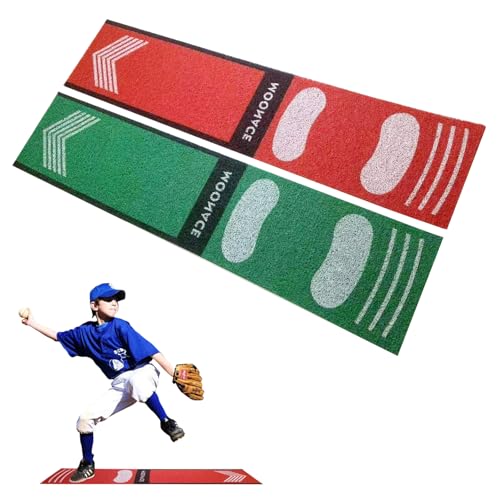
- ✓ Realistic strike zone
- ✓ Durable, weather-resistant
- ✓ Portable and stable
- ✕ Limited color options
- ✕ Slightly bulky for tiny spaces
| Material | Premium high-density rubber |
| Size/Dimensions | Regulation-size strike zone pitching mat |
| Surface/Grip | Non-slip textured surface for all-surface use |
| Use/Applicability | Suitable for youth to adult players; indoor and outdoor practice |
| Portability/Setup | Lightweight and portable with easy setup on grass, turf, or concrete |
| Durability/Conditions | Wear-resistant, weather-resistant, UV resistant, resistant to cracking |
You tilt the mat toward the sun and notice a tiny surprise: the strike zone design actually lines up with your own pitching stance, not just a graphic on the floor. That crisp, regulation-size zone makes you rethink your backyard setup in seconds.
The MOONACE mat feels substantial underfoot, thanks to the high-density rubber that doesn’t bend or curl at the edges. It grips grass, turf, and even concrete, so you can take wind-up steps without worrying about sliding out of position.
Setup is quick enough to feel almost instant. You unroll, flatten, and you’re ready to simulate a real bullpen.
The material holds up to UV exposure and daily use, which is exactly what you need for season-long practice without cracks or fading.
Visually, the painted strike zone is clear, and the texture under your front foot offers confidence on warm-up pitches. Your arm thanks you for the non-slip surface during those late-in-the-day sessions when the mound would usually bite back.
For multi-age players, the mat scales nicely from teens to adults. It’s lightweight enough to move between drills or field locations, yet sturdy enough to feel like a real pitching surface.
You’ll appreciate how it protects joints compared to hard mounds during longer bullpen blocks.
In practice, the zone feedback is instantaneous, helping you adjust stance, release, and follow-through on fastballs and breaking balls alike. It’s compact enough to drag along for travel teams or solo sessions, but confident enough to endure backyard weather swings.
Bottom line: if you want a portable, durable training tool that delivers a realistic feel without a hundred-dollar price tag, this mat earns its keep. It’s the kind of gear you’ll rely on all season, not just a few weeks of novelty drills.
What Are the Key Features of the Best Baseball Batting Stance?
The best baseball batting stance includes several key features that contribute to a player’s effectiveness at the plate.
- Feet Position: The feet should be shoulder-width apart with the weight balanced evenly, allowing for stability and quick movement. This stance provides a solid foundation for generating power and enables the player to pivot effectively during the swing.
- Knees Slightly Bent: Keeping the knees slightly bent creates a more athletic posture, enabling better flexibility and the ability to react quickly to different pitches. This position helps in lowering the center of gravity, which enhances balance during the swing.
- Grip on the Bat: The grip should be firm but relaxed, with the hands positioned close together near the handle of the bat. A proper grip allows for better control and quicker bat speed, which is essential for making solid contact with the ball.
- Bat Angle: The bat should be held at a slight angle, typically around a 45-degree tilt, which allows for a quicker swing path and better timing. This angle aids in generating backspin, resulting in more powerful hits.
- Head Position: Keeping the head still and eyes level is crucial for tracking the pitch effectively. A stable head position helps maintain focus on the ball and improves hand-eye coordination, which is vital for successful hitting.
- Shoulder Alignment: The shoulders should be parallel to the pitcher, promoting a square stance that allows for a straight and powerful swing. This alignment also helps in maintaining balance and generating torque during the swing.
- Relaxed Upper Body: A relaxed upper body allows for fluid movement and reduces tension, which can hinder performance. Tension in the arms or shoulders can lead to slower swings and less control over the bat.
How Does Weight Distribution Affect Batting Performance?
Engaging the lower body effectively helps in maintaining a solid foundation, allowing the upper body to execute a more fluid and powerful swing. When the legs and hips are involved, the batter can transfer energy more efficiently through the core and into the bat.
An adjustable stance allows players to modify their weight distribution based on pitch type or speed, enhancing adaptability and response time. This flexibility can be particularly beneficial when facing different pitchers or adjusting to various game situations.
Maintaining balance throughout the follow-through is essential for ensuring that the swing remains controlled and effective, preventing injury and improving consistency. A well-executed follow-through not only maximizes power but also allows for better tracking of the ball as it travels after contact.
Why is Hand Positioning Vital for a Good Batting Stance?
Hand positioning is crucial for achieving an effective baseball batting stance, as it influences both swing mechanics and overall power. Proper hand placement allows players to maintain balance and optimize bat speed, significantly impacting a player’s ability to make solid contact with the ball.
Key reasons why hand positioning matters include:
-
Bat Control: Correct hand placement enables a more controlled swing, allowing for precise adjustments based on pitch location. This control increases the chances of hitting the ball squarely.
-
Power Generation: Hands positioned correctly help to engage the larger muscles of the body during the swing, facilitating a more powerful motion. When the hands are too high or too low, the kinetic chain can become inefficient, leading to weaker contact.
-
Improved Timing: The right hand positioning aids in timing the swing with the pitch. It allows for an easier transition from the loading phase to the hitting phase, ensuring that the batter is ready when the ball arrives.
-
Consistency: Maintaining a consistent hand position helps develop muscle memory, which leads to more reliable performance at the plate. Players who can replicate their hand placement are likely to see improvements in their batting average.
Players should regularly practice their hand positioning drills to reinforce these essential mechanics.
What Popular Batting Stances Do Professional Players Prefer?
The best baseball batting stance varies among professional players, reflecting their unique styles and preferences.
- Open Stance: This stance features the back foot positioned further away from the plate, while the front foot is angled towards the pitcher. It allows for better visibility of the pitch and can lead to a quicker bat speed, as players can generate torque more efficiently.
- Closed Stance: In a closed stance, the back foot is closer to the plate compared to the front foot, creating a more compact hitting position. This stance can help with timing and balance, allowing players to focus on making solid contact with the ball, especially for pitches on the inside part of the plate.
- Square Stance: A square stance has both feet positioned parallel to the plate, which promotes an even weight distribution. This stance is often favored for its simplicity, allowing players to maintain balance and control, making it easier to adjust to different pitch locations.
- Crouched Stance: The crouched stance involves bending the knees and lowering the body closer to the ground. This position can enhance a player’s ability to track the ball and can generate more power through a lower center of gravity, but it requires good flexibility and strength to maintain balance.
- High Hands Stance: Players adopting a high hands stance hold the bat above their shoulders or chin, ready to swing. This position can help generate a quick bat path to the ball, but it may require more precise timing and hand-eye coordination to avoid swings at bad pitches.
- Low Hands Stance: In this stance, the bat is held lower, usually around the chest level, which can help players create a smoother swing. It allows for better leverage and can be particularly effective for pulling the ball, but may also lead to longer swing paths that could affect timing against fast pitches.
How Do Left-Handed and Right-Handed Batters’ Stances Differ?
The batting stances of left-handed and right-handed batters differ primarily in their positioning and grip, which can significantly influence their performance at the plate.
- Grip: Left-handed batters hold the bat with their left hand above their right, while right-handed batters do the opposite.
- Foot positioning: Left-handed batters typically position their right foot further back in the batter’s box compared to right-handed batters, who place their left foot back.
- Body alignment: Left-handed batters face the pitcher with their right side exposed, whereas right-handed batters present their left side to the pitcher, affecting their line of sight and swing path.
- Follow-through: The follow-through for left-handed batters often results in a high finish with the bat coming back across their body, contrasting with right-handed batters whose follow-through may extend outward more.
- Timing and pitch recognition: The stance can influence how each type of batter perceives pitch speed and location, with left-handed batters needing to adjust their timing against right-handed pitchers and vice versa.
The grip is crucial as it affects how the batter controls the bat and generates power. Left-handed batters, for example, may find it easier to pull the ball due to their grip orientation, whereas right-handed batters may excel in pushing the ball to the opposite field.
Foot positioning is essential for balance and power generation during the swing. Left-handed batters often have their right foot back to open up their hips more effectively, which can enhance their ability to hit inside pitches, while right-handed batters’ foot positioning allows them to protect the outside corner of the plate.
Body alignment plays a significant role in how batters perceive the pitch. Left-handed batters are often better positioned to see breaking balls from right-handed pitchers, while right-handed batters might find it easier to track fastballs from lefties, leading to differing strategies in approach.
The follow-through is indicative of the swing mechanics of each batter. Left-handed batters may generate more upward lift due to their finish, while right-handed batters often focus on a level swing that drives the ball more consistently into the ground or through the infield.
Finally, the timing and pitch recognition aspect can dictate how effectively each type of batter can adjust to different pitches. Left-handed batters may need to be quicker on inside pitches while right-handed batters often need to focus on recognizing off-speed pitches to improve their batting average.
What Can Amateur Players Learn from Professional Batting Stances?
Amateur players can learn valuable techniques and principles from observing the batting stances of professional players.
- Balance: A solid batting stance emphasizes balance, allowing players to maintain stability while preparing to hit. Professionals often adopt a stance that keeps their weight centered and evenly distributed, which is crucial for generating power and control in their swings.
- Grip and Hand Positioning: The grip and positioning of the hands can significantly affect a player’s swing mechanics. Observing how professionals hold the bat and the placement of their hands—whether high or low—can help amateurs find a comfortable yet effective grip that suits their own hitting style.
- Stance Width: The width of the batting stance can influence a player’s ability to generate power and adjust to pitch types. Professional players often experiment with different widths to find the right balance between stability and mobility, which can inspire amateurs to adjust their own stances accordingly.
- Bat Angle: The angle at which the bat is held can affect the trajectory and speed of the ball once hit. Professionals typically have a slight upward bat angle to optimize contact and elevate the ball, providing a model for amateurs to consider in their own stances.
- Body Alignment: Proper alignment of the body towards the pitcher is essential for effective hitting. Professional players often align their shoulders and hips to face the pitcher, which helps in tracking the ball better and improving swing mechanics, a technique that amateurs can adopt for better performance.
- Relaxation and Tension Management: A relaxed stance helps in reducing unnecessary tension, allowing for a smoother and more fluid swing. Professional players often demonstrate how to maintain a relaxed posture while still being ready to react, which can teach amateurs the importance of mental calmness in their approach.
What Adjustments Should Players Consider for Their Batting Stance?
When refining their batting stance, players should consider several key adjustments to optimize their performance at the plate.
- Foot Position: The placement of the feet can significantly influence balance and power. Players should typically stand with their feet shoulder-width apart to maintain stability while allowing for a quick stride into the pitch.
- Grip on the Bat: The way players grip the bat affects their swing mechanics and bat speed. A relaxed grip allows for better bat control, while a firm grip can help in generating more power, but players should avoid excessive tension to prevent loss of flexibility.
- Knees Slightly Bent: Keeping the knees slightly bent helps players stay agile and ready to react. This posture promotes a lower center of gravity, enhancing balance and enabling quicker movements during the swing.
- Upper Body Position: The angle of the upper body should be slightly tilted forward to facilitate a more effective swing path. Players should maintain a straight back to prevent unnecessary strain while ensuring their head stays level, allowing for better vision of the pitch.
- Weight Distribution: Players should distribute their weight evenly between their feet before the pitch is thrown. Shifting weight onto the back foot during the pitch allows for a more powerful swing, while a timely weight transfer to the front foot helps in driving the ball effectively.
- Head Position: Keeping the head still and eyes level is crucial for tracking the pitch. Players should avoid excessive movement to maintain focus on the ball, which aids in making solid contact and improving timing.
- Elbow Height: The positioning of the elbows can influence swing mechanics. Players often benefit from keeping their lead elbow elevated, which can help create a more direct line to the ball and improve bat speed through the zone.
How Can Personal Comfort Influence Your Batting Stance Selection?
- Foot Positioning: The placement of the feet can significantly impact stability and comfort while batting. A wider stance may provide better balance for power hitters, while a narrower stance may help players who prioritize quickness and agility in their swings.
- Grip and Hand Placement: The way a player grips the bat and positions their hands can influence their comfort and control. A relaxed grip often leads to a more fluid swing, while a tighter grip may create tension, affecting swing mechanics and timing.
- Body Alignment: Proper alignment of the body in relation to the pitcher can enhance comfort and effectiveness. Players may feel more comfortable with an open or closed stance, depending on their hitting style and how they perceive the pitcher’s delivery.
- Weight Distribution: How a player distributes their weight can affect their batting stance and swing. Comfortably shifting weight onto the back foot can help generate power, while keeping weight evenly distributed may aid in quicker reactions to pitched balls.
- Posture and Upper Body Position: The posture of the upper body during the stance can greatly affect comfort and swing mechanics. An upright stance may provide better visibility of the pitch, while a more crouched position can help some players feel more compact and ready to swing.
What Are Common Mistakes to Avoid When Setting Up a Batting Stance?
When setting up a batting stance, avoiding common mistakes can greatly impact a player’s performance.
- Improper Foot Placement: It’s essential to have the feet positioned shoulder-width apart to maintain balance. A stance that is too narrow can hinder stability, while one that is too wide can restrict mobility and quick adjustments.
- Incorrect Grip on the Bat: The grip on the bat should be firm yet relaxed, allowing for better control during the swing. A grip that is too tight can lead to tension in the hands and arms, affecting swing speed and fluidity.
- Too Much Weight on the Back Foot: Many players mistakenly lean too heavily on their back foot, which can limit forward momentum and power during the swing. A balanced weight distribution helps in generating more force and allows for a smoother weight transfer during the swing.
- Overly Closed or Open Stance: An overly closed stance can restrict a player’s ability to hit outside pitches, while an excessively open stance may reduce the ability to hit inside pitches effectively. Finding a neutral stance that allows for the best range of motion can enhance versatility at the plate.
- Neglecting Head Position: Keeping the head still and eyes level is crucial for tracking the pitch effectively. It’s a common mistake for players to move their heads too much, which can lead to poor pitch recognition and timing issues.
- Failing to Practice Regularly: Establishing a proper batting stance is not just about knowing what to do; it requires consistent practice to develop muscle memory. Regular practice helps players refine their stance and make necessary adjustments based on their performance.