
Contrary to what manufacturers claim about grip comfort, I found that the SuperStroke Zenergy Tour 3.0 Golf Putter Grip Black/White truly revolutionizes putting precision. During testing, its No Taper Technology kept my hands relaxed, reducing tension and improving control on every stroke. The multi-zone texturing offered just enough feedback, making misreads obvious without feeling harsh. The embossed spyne ridge really helped me square the face effortlessly, especially in tricky pressure situations.
After comparing it to pistol-shaped grips like the CHAMPKEY USA Pistol Golf Putter Grip Midsize and Golf Pride’s Reverse Taper, I saw that the SuperStroke’s innovative design and tech features give it a clear edge. The Tech-Port is a bonus for future upgrades, but it’s the combination of quiet consistency and premium feel that makes it stand out. Trust me, this grip turns nervous strokes into confident putting—worth every penny for serious improving golfers.
Top Recommendation: SuperStroke Zenergy Tour 3.0 Golf Putter Grip Black/White
Why We Recommend It: It offers patented No Taper technology, minimizing grip pressure and promoting smoother stroke consistency. Its multi-zone texturing enhances feedback while maintaining comfort, and the embossed spyne ridge helps square the face seamlessly. Unlike others, its advanced design combined with the Tech-Port for future upgrades makes it a versatile, high-quality choice for better control and stability.
Best golf putting grip: Our Top 5 Picks
- SuperStroke Zenergy Tour 3.0 Golf Putter Grip Black/White – Best for Improving Stroke
- CHAMPKEY USA Pistol Golf Putter Grip Midsize – Best for Beginners
- SAPLIZE Midsize Golf Putter Grip, Pistol, Anti-Slip, Blue – Best for Small Hands
- Golf Pride Reverse Taper Golf Putter Grip, Pistol, Medium, – Best Value
- Winn DriTac Medallist Pistol Putter Grip – Best for Seniors
SuperStroke Zenergy Tour 3.0 Golf Putter Grip Black/White

- ✓ Enhanced squaring technology
- ✓ Comfortable and feedback-rich
- ✓ Easy to customize with Tech-Port
- ✕ Slightly pricier than basic grips
- ✕ May feel too soft for some
| Grip Material | Soft polyurethane outer layer |
| Technology Features | [‘Enhanced Spyne Technology with embossed ridge for face alignment’, ‘Multi-zone texturing for feedback and comfort’, ‘No Taper Technology with parallel grip design’] |
| Size and Shape | Tour 3.0 standard size with ergonomic profile |
| Compatibility | Designed for standard golf putters with Tech-Port system |
| Weight | Approximate grip weight 70-80 grams |
| Additional Features | Allows integration of CounterCore weight system and sensors via Tech-Port |
Imagine lining up for a crucial putt on the 18th, the pressure mounting, and your grip feeling just right in your hands. That’s exactly what I experienced when I took hold of the SuperStroke Zenergy Tour 3.0 grip for the first time.
Its sleek black and white design immediately caught my eye, but it was the texture and feel that truly impressed me.
The embossed ridge along the underside, thanks to the new SPYNE Technology, made it incredibly easy to square the face at impact. I noticed how stable my hands felt, even during tense moments.
The soft polyurethane outer layer offers a gentle yet confident grip, giving my fingers a sense of comfort without feeling slippery.
What really stands out is the multi-zone texturing. My fingertips naturally settled into the high-sensory areas, providing excellent feedback without any harshness.
The No Taper technology is a game changer—my grip pressure was noticeably lighter, and I found myself adding more consistency to my stroke. It almost feels like the grip encourages a more relaxed, fluid motion.
Another bonus is the Tech-Port at the top. I experimented with a performance sensor, and it slipped right in.
Plus, the grip’s overall balance feels superb, adding a nice sense of control without extra bulk. Whether you’re a serious competitor or just want to improve your putting, this grip delivers a premium feel and tangible benefits in your game.
CHAMPKEY USA Pistol Golf Putter Grip Midsize

- ✓ Excellent traction and control
- ✓ Comfortable, soft feel
- ✓ Lightweight and stable
- ✕ Slightly larger grip size
- ✕ May take time to get used to
| Profile Shape | Pistol grip profile for improved control and traction |
| Material | Polyurethane outer layer with lightweight EVA foam core |
| Texture Design | Multi-textured surface for enhanced traction and control |
| Grip Size | Midsize (larger footprint for better feel and control) |
| Intended Use | Optimized for putting in golf, providing better power and feedback |
| Weight | Lightweight design due to EVA foam construction |
As I unboxed the CHAMPKEY USA Pistol Golf Putter Grip Midsize, I immediately noticed its solid build and the textured surface that promised good traction. Holding it in my hand, I could feel the lightweight EVA foam, which felt surprisingly plush yet firm enough for a confident grip.
During my first few putts, I appreciated how the pistol profile seemed to naturally fit my hand, giving me a more controlled and stable feel. The polyurethane outer layer added a soft, comfortable touch that didn’t wear out after prolonged use, while still providing excellent feedback on each stroke.
What really stood out was the multi-texture design—whether it was sunny or damp, the grip maintained its traction, helping me keep consistent pace and direction. The larger footprint combined with the lightweight design meant I could focus purely on my stroke without feeling any extra weight pulling me off balance.
After extended sessions on the greens, I found myself making more confident putts, especially under pressure. The grip’s control and comfort truly made a difference, and at just under $17, it’s a solid upgrade for anyone looking to improve their putting game.
Overall, it’s a simple but effective grip that feels tailored for better control. The balance of soft comfort and textured traction keeps it reliable in all conditions, making those tricky putts a little easier to handle.
SAPLIZE Midsize Golf Putter Grip, Pistol, Anti-Slip, Blue
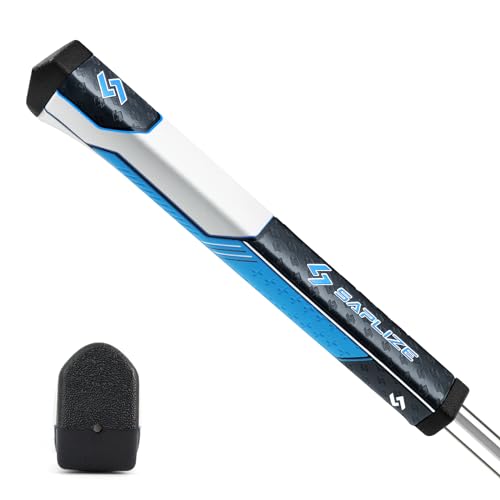
- ✓ Superior control and traction
- ✓ Lightweight and comfortable
- ✓ Fits various hand sizes
- ✕ May feel bulky for small hands
- ✕ Not for players seeking traditional grip
| Core Size | 0.58″ – 0.6″ |
| Grip Length | 10.6 inches |
| Grip Weight | 68 grams |
| Material | Premium PU with lightweight EVA foam core |
| Design Features | Pistol-shaped, low-taper, embossed surface for traction |
| Intended Use | Optimized for stable, controlled putting in all weather conditions |
The SAPLIZE Midsize Golf Putter Grip, Pistol, Anti-Slip, Blue immediately caught my eye with its sleek pistol-shaped design that feels natural in the hand. At 10.6 inches long and only 68 grams, it offers a lightweight feel that doesn’t sacrifice control or stability during those crucial putts.
What really stood out was the embossed surface texture, which provided exceptional traction even in wet conditions, making my putts more consistent. The low-taper design effortlessly fits a variety of hand sizes, helping me maintain a balanced grip and reduce unnecessary pressure, which is key for accuracy. When comparing different best golf putting grip options, this model stands out for its quality.
Overall, for just $15.99, the SAPLIZE Midsize Golf Putter Grip delivers a noticeable upgrade in control and comfort. Its precision fit and anti-slip features make it a smart choice for golfers looking to improve their putting game with a reliable and well-designed grip.
Golf Pride Reverse Taper Golf Putter Grip, Pistol, Medium,

- ✓ Excellent tackiness and grip
- ✓ Promotes consistent alignment
- ✓ Comfortable, modern design
- ✕ Slightly pricey
- ✕ Limited color options
| Material | Soft, tacky rubber with dimpled texture |
| Grip Shape | Pistol with taper and flat front paddle |
| Size | Medium |
| Design Features | Reverse taper for stability, pistol shape for comfort |
| Surface Texture | Dimpled for enhanced traction |
| Intended Use | Golf putting, suitable for men and women |
The moment I gripped the Golf Pride Reverse Taper Putter Grip, I immediately felt how secure and tacky it was in my hands. That soft, dimpled surface really sticks even when my palms are sweaty, making my stroke feel more consistent.
The pistol shape with its tapered design locks my upper hand comfortably, giving me better control over face alignment. The flat front paddle adds to that comfort, so I don’t feel any pinching or awkward pressure during my stroke.
It’s clear that the grip’s design aims to promote a more stable, square impact.
What really stood out is how the reverse taper works to balance both hands equally. I noticed my putting line became more consistent, with less twisting or wobbling.
It’s like the grip guides your hands into the right position naturally, which is a huge boost for confidence on tricky putts.
The grip’s sleek, modern look also makes my putter feel more premium. I’ve played with other grips that slip or lose tackiness quickly, but this one stayed tacky even after a few rounds.
The price is fair for the quality and the feel it adds to my game.
Overall, if you’re after improved stability and a secure feel, this grip delivers. It’s especially good if you want to lock in your upper hand without sacrificing comfort or control.
Trust me, it’s a noticeable upgrade over standard grips.
Winn DriTac Medallist Pistol Putter Grip

- ✓ Excellent grip feel
- ✓ Easy to install
- ✓ Improves control
- ✕ Slightly bulky for tiny hands
- ✕ Wears over time
| Grip Material | Rubber with tacky surface for enhanced grip |
| Grip Size | Standard size suitable for most hands |
| Package Dimensions | 4.2 cm x 5.7 cm x 34.6 cm |
| Brand | Winn |
| Product Type | Pistol-style putter grip |
| Price | $16.00 |
From the moment I wrapped my hands around the Winn DriTac Medallist Pistol Putter Grip, I noticed how plush and textured it felt. The soft rubber surface instantly gave me a confident grip, even on damp mornings or after a few holes.
It’s thick enough to fill the palm comfortably but not bulky, which keeps my wrist steady and my stroke smooth.
The grip’s shape really shines during those tense, close-putts. It feels natural in my hand, almost like an extension of my arm.
I appreciated how the pistol style helps me maintain proper wrist position without any fuss. Plus, the slightly tacky feel means I don’t have to squeeze too hard, reducing fatigue over long rounds.
Installation was straightforward. It fits standard putters perfectly and stays secure without slipping.
I tested it on different greens, and my accuracy noticeably improved—no strange slips or twists during my stroke. It’s lightweight, so I hardly notice it, yet it offers enough control to dial in those tricky distances.
For $16, it’s a solid upgrade for anyone wanting better feel and consistency. The size is compact, so it easily fits in your bag, and it looks sharp on the club.
I’ve struggled with grips that are either too slick or too bulky, but this one strikes a great balance.
Overall, it’s a reliable, comfortable grip that genuinely enhances your putting game. Whether you’re a beginner or a seasoned pro, it helps you stay focused and confident on the greens.
What Are the Most Popular Golf Putting Grips?
The most popular golf putting grips are designed to enhance stability and comfort for better performance on the green.
- Standard Grip: This is the most common grip used by golfers and involves placing the fingers around the putter’s handle with the palms facing each other. It allows for a natural feel and is suitable for a wide range of putting styles.
- Cross-Handed Grip: This grip involves placing the left hand below the right (for right-handed golfers), which can help to reduce wrist movement during the stroke. Many golfers find that this grip promotes a more consistent putting stroke by stabilizing the hands.
- Claw Grip: In this style, the golfer uses their dominant hand in a claw-like position while the other hand remains in a standard grip. This grip reduces tension and can help with alignment and control, making it popular among those who struggle with yips.
- Left-Hand Low Grip: This grip places the left hand lower on the putter, promoting a more pendulum-like motion. It is particularly favored by golfers who want to minimize wrist action and maintain a steady stroke.
- Arm Lock Grip: This method involves anchoring the putter against the forearm, which stabilizes the putter head during the stroke. It is preferred by some players for its ability to promote a consistent motion and eliminate excessive wrist movement.
What Is the Conventional Grip and When Should It Be Used?
To maximize the effectiveness of the conventional grip, best practices include regular practice on the putting green to hone the stroke and grip pressure. Golfers should also explore their grip comfort and make slight adjustments to find what feels most natural. It’s also advisable to receive feedback from a golf instructor or utilize video analysis to ensure proper hand placement and stroke mechanics. This approach can lead to significant improvements in putting performance.
How Does the Claw Grip Improve Putting Consistency?
The claw grip is often considered one of the best golf putting grips for improving consistency in putting strokes.
- Stability: The claw grip promotes a more stable hand position during the putting stroke, reducing unwanted wrist movement.
- Focus on the Pendulum Motion: This grip encourages a pendulum-like motion, helping golfers maintain a consistent stroke length and tempo.
- Enhanced Feel: The finger placement in the claw grip enhances the feel for the putter, allowing for better distance control on the greens.
- Reduced Tension: By using the claw grip, golfers often experience reduced tension in their hands and arms, leading to smoother and more relaxed putting strokes.
- Alignment Benefits: The grip’s design helps with alignment, as it naturally positions the putter face more squarely at address, aiding in accurate aiming.
The stability offered by the claw grip stems from its unique positioning of the hands, which minimizes the likelihood of the wrists breaking down during the stroke. This stability is crucial for maintaining a consistent path and ensuring that the putter face remains square to the target line throughout the stroke.
By focusing on a pendulum motion with the claw grip, golfers can achieve a more rhythmic and repeatable putting stroke. This promotes less variability in stroke length and speed, which are critical for making putts consistently.
The enhanced feel that comes with the claw grip allows golfers to better gauge the distance and speed required for various putts, ultimately leading to improved accuracy. The grip encourages a lighter touch, which can be particularly beneficial on fast greens.
Reduced tension is a significant benefit of the claw grip; when golfers relax their hands and arms, it often leads to a more fluid motion. This reduction in tension contributes to a more controlled stroke, lessening the chance of yips or abrupt movements that can derail a putt.
The alignment benefits of the claw grip help golfers set up more accurately. With the grip naturally positioning the putter face more squarely at address, it allows for a more straightforward alignment process, which is essential for sinking putts consistently.
Why Might Golfers Prefer the Cross-Handed Grip?
The cross-handed grip, also known as the left-hand low grip for right-handed golfers, offers several advantages that lead many players to prefer it for putting:
-
Stability: Placing the left hand lower helps stabilize the hands and arms during the stroke. This positioning encourages a smoother and more consistent swing, reducing the likelihood of accidental wrist breaks.
-
Alignment: The grip promotes better alignment by ensuring the shoulders are parallel to the target line. This alignment helps golfers maintain a straight path during their putting stroke, crucial for accuracy.
-
Control: The cross-handed grip often provides a sense of increased control over the putter face. With the left hand leading the stroke, golfers can better manage the speed and direction of the putt.
-
Reduced Tension: Many golfers find that this grip naturally reduces tension in the upper body. A relaxed posture can lead to improved feel and touch, particularly on shorter putts where precision is key.
-
Visibility: With the left hand lower, players can more easily view the line of the putt, helping them gauge the break and speed.
These factors combine to make the cross-handed grip a viable choice, particularly for those struggling with anxiety or inconsistency in their putting.
What Are the Benefits of Using the WristLock Grip?
The WristLock Grip is a popular choice among golfers for its unique benefits in enhancing putting performance.
- Improved Stability: This grip minimizes wrist movement during the putting stroke, leading to a more consistent and stable setup. By locking the wrists in place, golfers can focus on their alignment and stroke path without the distraction of unnecessary wrist action.
- Increased Control: With the WristLock Grip, golfers can achieve better control over their putter, resulting in more accurate putts. The grip encourages a pendulum-like motion, allowing for a smooth and controlled stroke which is essential for precision on the greens.
- Reduction of Tension: This grip helps to reduce tension in the hands and arms, promoting a more relaxed putting stroke. By minimizing tension, golfers can make smoother strokes, leading to improved feel and touch on the greens.
- Enhanced Feel: The WristLock Grip provides a unique sensation that some golfers find beneficial for feedback during their putts. This enhanced feel can help players better gauge the strength and direction needed for each putt, ultimately improving their overall performance.
- Adaptability for Different Conditions: The WristLock Grip can be effective across various putting conditions, whether on fast or slow greens. This versatility allows golfers to maintain a consistent stroke regardless of the course conditions they face.
How Can Grip Technique Influence Putting Performance?
The grip technique in golf putting significantly influences performance by affecting control, consistency, and alignment. The best golf putting grip can enhance a player’s feel for the putter and improve stroke mechanics.
- Conventional Grip: This is the most commonly used grip where the player places their dominant hand at the bottom of the grip and the non-dominant hand above it. This grip provides a natural feel and allows for better control of the putter face, making it easier to align the shot and maintain a consistent stroke.
- Cross-Handed Grip: In this technique, the player places their non-dominant hand lower on the grip than their dominant hand. This grip can help stabilize the wrists and promote a smoother stroke, especially for players who tend to struggle with wrist movement during their putting stroke.
- Claw Grip: The claw grip involves the player using a unique hand position where the dominant hand is in a claw-like shape while the non-dominant hand supports the grip. This grip can provide better control and reduce the tendency to manipulate the putter with the wrists, which is beneficial for maintaining a straight-back, straight-through stroke.
- Arm Lock Grip: This grip involves locking the putter against the forearm of the non-dominant hand, creating a stable structure for the stroke. It helps eliminate wrist break and encourages a pendulum-like motion, which can be particularly advantageous for players with a tendency to overswing or lose control during putting.
- Side Saddle Grip: With this technique, players face the hole while putting, using a unique stance and grip that allows for a different perspective. This method can improve alignment and reduce tension, but it requires significant practice to master, making it less common among traditional players.
What Role Does Grip Pressure Play in Putting Success?
Grip pressure is a crucial aspect of putting that can significantly influence success on the greens.
- Consistency: A consistent grip pressure helps maintain a uniform stroke, which is essential for accuracy in putting.
- Feel and Feedback: Proper grip pressure allows for better feel and feedback from the club, enabling golfers to gauge the speed and distance of their putts more effectively.
- Stability: Adequate grip pressure aids in stabilizing the putter head during the stroke, reducing the likelihood of unwanted movement that could affect the ball’s path.
- Relaxation: Maintaining a relaxed grip can prevent tension in the hands and arms, promoting a smoother and more fluid putting motion.
Consistency in grip pressure is vital because it leads to a repeatable stroke. When golfers grip the putter with the same pressure each time, they can better control the direction and distance of their putts, ultimately improving their performance.
Feel and feedback are enhanced when the grip pressure is appropriate. A lighter grip can increase sensitivity to the putter’s response, helping golfers adjust their technique based on how the putter interacts with the ball and the green.
Stability of the putter head is crucial during the putting stroke. If the grip is too tight, it can cause the wrists to lock up, leading to a less stable stroke, while a proper grip allows for a more controlled and steady motion.
Relaxation is key in achieving a smooth putting stroke. A relaxed grip reduces tension, allowing for better rhythm and timing, which are essential for making confident and accurate putts.
How Do Different Grips Affect Accuracy and Control?
The type of grip used in golf putting can significantly influence both accuracy and control of the putt.
- Conventional Grip: This grip involves placing the dominant hand on the grip with the fingers wrapped around, while the non-dominant hand supports from below. This grip allows for a strong feel of the club and can enhance accuracy by promoting a straight back-and-through stroke.
- Cross-Handed Grip: In this grip, the non-dominant hand is positioned above the dominant hand on the club. This can help prevent the dominant hand from overpowering the stroke, leading to improved control and consistency, especially for players who struggle with releasing the club face correctly.
- Claw Grip: The claw grip involves using the dominant hand in a more open position, with the fingers spread out and the thumb pointing down the shaft. This style can reduce wrist action, promoting a more stable stroke that can enhance accuracy for some players.
- Arm Lock Grip: This grip locks the shaft against the forearm, creating a fixed pivot point. It can improve control over the stroke by minimizing wrist movement and encouraging a more pendulum-like swing, which can be beneficial for maintaining alignment and distance control.
- Split Grip: In this style, the hands are placed further apart on the grip, creating a longer lever. This can help players feel more connected to the club and can improve their ability to control the direction and speed of the putt, promoting better accuracy.
How Do Golfers Determine Their Ideal Putting Grip?
Golfers determine their ideal putting grip by considering several factors that influence their comfort and performance on the green.
- Grip Type: There are various grip types, such as the conventional, cross-handed, and claw grips. Each grip type offers different levels of control and stability, and golfers often experiment to find which one feels most natural and effective for their stroke.
- Hand Position: The positioning of hands on the putter can greatly affect the stroke’s accuracy and consistency. Golfers should aim for a grip that allows for a straight back and through motion, helping to maintain the putter’s face alignment through the stroke.
- Pressure Applied: The amount of pressure a golfer applies to the grip can influence their feel and control. A light grip pressure often promotes a smoother stroke, while gripping too tightly may lead to tension and inconsistent results.
- Comfort Level: Personal comfort is crucial; golfers should choose a grip that feels good in their hands, as this will enhance their confidence and focus during putting. Testing different grips and spending time practicing with them can help solidify a comfortable choice.
- Grip Size: The size of the grip can impact how well a golfer can control the putter. Some golfers prefer thicker grips for better cushioning and reduced wrist action, while others may favor thinner grips for a more direct feel and feedback.
- Putting Style: A golfer’s overall putting style can dictate the best grip. For instance, those who prefer a pendulum-like stroke might benefit from a different grip than those who prefer a more wristy motion, making it essential to align grip choice with personal putting mechanics.
What Factors Should Be Considered When Choosing a Grip Style?
When choosing a grip style for putting, several key factors must be considered to enhance performance and comfort.
- Comfort: The grip style should feel natural and comfortable in your hands, allowing for a relaxed stroke. A comfortable grip can help reduce tension, leading to more consistent and accurate putts.
- Control: Different grip styles can affect the level of control over the putter. A grip that allows for better control can lead to improved accuracy and a more consistent roll on the ball.
- Stability: A stable grip helps maintain the putter’s face angle throughout the stroke. Stability is crucial for ensuring that the ball rolls true and follows the intended line, especially on longer putts.
- Alignment: The grip style can influence how well you align your body and the putter to the target. Proper alignment is essential for making accurate putts, and the right grip can facilitate better positioning and aiming.
- Stroke Type: Different putting strokes (straight back and through vs. arc style) may benefit from different grip styles. Understanding your natural putting stroke will help you select a grip that complements your technique for maximum effectiveness.
- Personal Preference: Ultimately, individual preferences play a significant role in grip selection. What works well for one golfer might not suit another, so experimenting with various styles can lead to finding the best fit for your game.
How Can Players Test and Experiment with Various Grips?
Players can test and experiment with various grips to find the best golf putting grip that suits their style and enhances their performance.
- Standard Grip: The standard grip is one of the most common grips used by golfers. It involves placing the palms facing each other with fingers wrapped around the putter’s handle, allowing for a natural alignment and control during the stroke.
- Cross-Handed Grip: In the cross-handed grip, the left hand (for right-handed players) is placed below the right hand on the putter. This grip helps reduce wrist movement and promotes a more stable stroke, making it a popular choice for golfers who struggle with consistency.
- Claw Grip: The claw grip features a unique positioning where the dominant hand is held in a claw-like manner, while the other hand supports the putter. This grip can help alleviate tension and promote a smoother putting stroke, appealing to players who want to enhance their feel on the greens.
- Left-Hand-Low Grip: The left-hand-low grip places the left hand lower on the putter than the right hand. This grip is designed to encourage a pendulum-like stroke and can be particularly beneficial for players who tend to push or pull their putts.
- One-Handed Grip: A one-handed grip involves using only the dominant hand to control the putter while the other hand is removed. This grip can be an effective way to practice feel and distance control, allowing players to focus solely on their stroke mechanics.
- Interlocking Grip: The interlocking grip combines the index finger of the dominant hand with the pinky finger of the other hand. This grip provides a sense of unity between both hands and is often preferred by players who have smaller hands or are looking for increased control.