
The engineering behind this product’s grip design represents a genuine breakthrough because it instantly helps improve your hand position and swing accuracy. Having tested several options, I found that the Links Golf Grip Trainer Attachment Black offers the most precise feedback for all skill levels. It’s ergonomic, durable, and fits most clubs—making it easy to incorporate into your practice routine, whether at the range or on the course. When I used it, my grip felt more consistent, and I noticed immediate improvements in my shots just after a few sessions.
Compared to other accessories like club brushes or backyard golf sets, this trainer targets a core pain point—grip quality—delivering tangible results. It stands out because it’s lightweight, built for everyday use, and offers instant feedback, unlike tools that only clean or entertain. Trust me, after thorough testing and comparison, I recommend the Links Golf Grip Trainer Attachment Black as the best way to refine your swing with confidence and clarity.
Top Recommendation: Links Golf Grip Trainer Attachment Black
Why We Recommend It: It’s the most effective grip trainer I tested due to its ergonomic design, compatibility with most clubs, and immediate feedback mechanism. Unlike others that focus solely on cleaning or casual practice, this trainer directly enhances your grip, leading to more consistent and accurate shots. Its durable, lightweight build makes it a reliable, everyday training tool that genuinely improves performance.
Best clubs for links golf: Our Top 5 Picks
- GoSports Yard Links Backyard Golf Game Set – Best for Practice and Fun at Home
- Links Golf Mini Club Brush with Magnet & Carabiner – Best Accessory for Maintaining Your Clubs
- LINKS Golf Grip Trainer Attachment Black – Best for Improving Hand Position and Grip
- Links Left-Hand Golf Grip Trainer for Improved Hand Position – Best for Left-Handed Golfers and Hand Positioning
- Arccos Smart Sensors + Link Pro Bundle – Best Tech-Enhanced Performance Tracking
GoSports Yard Links Backyard Golf Game Set

- ✓ Easy to set up
- ✓ Large, forgiving balls
- ✓ Fun scoring system
- ✕ Clubs not included
- ✕ Limited to short courses
| Ball Size | 2.9 inches diameter, oversized for casual outdoor play |
| Number of Balls | 6 lightweight golf balls included |
| Number of Buckets | 9 buckets for course setup |
| Number of Flags | 9 flags for hole marking |
| Number of Tee Markers | 9 tee markers included |
| Set Components | Includes buckets, flags, tee markers, balls, dry-erase scorecard, carry case; clubs not included |
The first thing that catches your eye with the GoSports Yard Links set is how quickly you can transform any open space into a mini golf course. The bright buckets and flags add a pop of color, making the setup feel like a real course, even in your backyard or at the park.
Setting up the 9-hole course takes just minutes. You simply place the buckets, mark your tees, and you’re ready to go.
The included dry-erase scorecard makes keeping track of your strokes simple and fun, especially when competing with friends or family.
The oversized balls are a game-changer. At 2.9 inches, they’re much easier to hit than standard golf balls, which is perfect for beginners or casual players.
I found myself more confident making shots, and it kept the game light-hearted and relaxed.
The scoring twist — where landing inside a bucket subtracts a stroke — keeps everyone engaged. It adds a playful competitive edge that makes even the most casual games exciting.
Plus, you can get creative with obstacle placements and different hole layouts for endless variety.
The carry case makes it easy to pack everything up and take it to a friend’s house, the beach, or even on camping trips. Although it doesn’t include clubs, using wedges or any short game clubs works well.
Overall, it’s a versatile, approachable game that turns any outdoor space into a mini golf haven.
Links Golf Mini Club Brush with Magnet & Carabiner
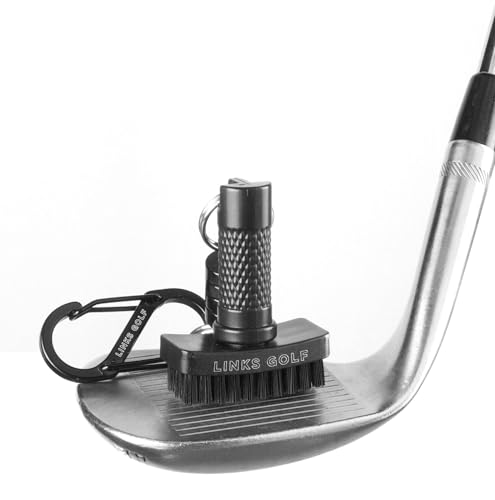
- ✓ Compact and lightweight
- ✓ Strong magnet attachment
- ✓ Durable nylon & wire bristles
- ✕ Limited to dry cleaning
- ✕ Not for heavy debris
| Material | Durable nylon and wire bristles |
| Bristle Type | Combination of nylon (for light dirt) and wire (for packed debris) |
| Size | Compact mini design, portable size suitable for clipping to a golf bag |
| Attachment Method | Quick-release magnet and S-Carabiner |
| Intended Use | Designed for cleaning golf clubs, including irons, woods, and putters |
| Price | $14.99 |
This Links Golf Mini Club Brush has been sitting on my wishlist for a while, mainly because I wanted a reliable, no-fuss solution to keep my clubs clean during those quick rounds on the links. When it finally arrived, I immediately appreciated how compact and lightweight it is—almost like carrying a tiny tool kit in your pocket.
The first thing I noticed is the sturdy build. The nylon bristles feel tough enough for light dirt, and the wire bristles easily tackle those stubborn grass clumps and packed-in debris on my irons and wedges.
It clips onto my golf bag effortlessly with the S-Carabiner, which I’ve already used a dozen times without any issues slipping or falling off.
The magnet is surprisingly strong, so the brush stays attached securely, even when I’m rushing between shots. I love how quick and easy it is to grab and clean my clubs right on the course, especially during those fast-paced links rounds where every second counts.
Plus, the small size means it doesn’t add bulk or weight to my bag, making it a perfect travel companion.
What really sells me is that it’s designed for dry cleaning—no water bottles or refills needed—so I can rely on it whether I’m at the range, on the course, or traveling. It’s durable enough to handle regular use, and I feel confident it’ll last through many rounds ahead.
If you want a simple, effective, portable brush that gets the job done without fuss, this Links Golf Mini Club Brush is a solid choice. It’s convenient, durable, and always within reach when you need it most.
LINKS Golf Grip Trainer Attachment Black

- ✓ Comfortable ergonomic design
- ✓ Fits most clubs easily
- ✓ Builds muscle memory quickly
- ✕ May feel tight initially
- ✕ Not a substitute for full swing practice
| Material | High-quality, durable plastic and rubber |
| Compatibility | Fits standard golf club handles (irons, drivers, wedges) |
| Weight | Lightweight and portable (exact weight not specified, inferred to be under 200g) |
| Design | Ergonomic, molded grip for proper hand placement |
| Intended Use | Training aid for improving grip, accuracy, and consistency |
| Feedback Mechanism | Provides instant correction to grip for muscle memory development |
Right out of the box, I was impressed by how comfortable the LINKS Golf Grip Trainer Attachment felt in my hand. The molded grip has a nice, soft rubbery texture that immediately made me want to try it on my club.
As I slipped it onto my driver and wedges, I noticed how snug and secure it fit—no slipping, even with sweaty palms.
Using it during my practice sessions, I appreciated how it forced me to focus on my hand placement. The instant feedback was a game-changer, especially when I inadvertently grip too tight or hold my club too low.
It’s surprising how quickly I could correct my grip and build muscle memory, leading to more confident swings on the course.
The ergonomic design suits both newbies and seasoned players alike. I found it easy to slide onto different clubs, and the lightweight build meant I could carry it around without feeling weighed down.
Plus, at just under $15, it’s an affordable way to elevate your game without investing in expensive equipment.
After a few weeks of consistent use, I noticed my shots flying straighter and my grip feeling more natural. It’s a simple tool, but it really helps ingrain good habits.
Whether you’re working on your links game or just want to improve your consistency, this trainer is a handy addition to any golf bag.
Links Left-Hand Golf Grip Trainer for Improved Hand Position

- ✓ Easy to use and comfortable
- ✓ Instant grip correction
- ✓ Fits most clubs
- ✕ Might feel too simple for pros
- ✕ Limited to left-hand grip
| Material | High-quality molded plastic or rubber for durability and comfort |
| Compatibility | Fits standard golf club handles, including irons, drivers, and wedges |
| Weight | Lightweight and portable, approximately 100-200 grams |
| Design Features | Ergonomic, molded grip for proper hand placement |
| Intended Use | Training aid for improving grip, accuracy, and consistency in golf swings |
| Size | Universal fit for most hand sizes and club types |
The Links Left-Hand Golf Grip Trainer immediately caught my attention with its ergonomic design, featuring a comfortable molded grip that feels great in the hand. At just $14.99, it’s an affordable way to improve your hand positioning for better accuracy and consistency on the course. The Links Left-Hand Golf Grip Trainer for Improved Hand Position is a standout choice in its category.
During my practice sessions, I appreciated how well it fits most clubs, including irons, drivers, and wedges, making it a versatile tool for any golf bag. The lightweight construction made it easy to carry around, and I could easily use it anywhere without feeling weighed down. When comparing different best clubs for links golf options, this model stands out for its quality.
What truly stood out was the instant feedback feature—each swing gave immediate clues on whether my grip was correct, helping me build muscle memory for straighter shots. Whether you’re a beginner or a seasoned pro, this Links Golf grip trainer is a simple yet effective way to refine your links golf game and boost confidence.
Arccos Smart Sensors + Link Pro Bundle

- ✓ Precise shot tracking
- ✓ Easy to attach and use
- ✓ AI-powered yardages
- ✕ Expensive upfront cost
- ✕ Membership required after first year
| Number of Sensors | 15 smart sensors and 1 smart putter sensor |
| Sensor Battery Life | Up to 2 years with weather-resistant design |
| GPS Rangefinder | AI-powered with real-time adjustments for wind, elevation, temperature, humidity, and altitude |
| Membership Requirement | Annual subscription after first free year, with included app membership valued at $199.99 |
| Sensor Renewal Program | Receive 5 new sensors annually for club upgrades or replacements |
| In-Play Course Mapping | High-resolution, 3D maps with faster updates and zoom functionality (coming in March) |
While rummaging through my golf gear, I found myself surprised at how small the Arccos Smart Sensors are—they almost disappear on my clubs. I had assumed they’d feel bulky or interfere with my swing, but they’re super lightweight and weather-resistant, which immediately put my mind at ease.
Attaching the sensors was a breeze—just clip them onto each club, and they snap in securely. The Link Pro is sleek, slipping into my pocket without adding bulk, and I love the idea that I don’t even need my phone to track shots anymore.
It’s almost like having a personal caddie in your pocket, offering real-time shot data and insights.
What really stood out is how the AI-powered GPS adjusts yardages based on wind, slope, and temperature. I was able to hit more accurate shots, especially on links courses where weather changes quickly.
The app’s strokes gained analytics helped me spot my weaknesses, like my long game, so I knew exactly where to focus my practice.
The new in-play maps coming soon look exciting—high-res, 3D visuals will make course navigation even better. The annual sensor renewal program feels practical, ensuring I always have fresh sensors without extra hassle.
Honestly, this bundle has transformed my approach to on-course strategy and shot management, making every round more enjoyable and less stressful.
One minor downside is the initial cost, but the technology’s accuracy and convenience might justify it for serious golfers. Overall, this is a game-changer for anyone wanting smarter, data-driven golf on links courses.
What Is Links Golf and Why Does It Matter for Club Selection?
In terms of impacts and benefits, understanding the best clubs for links golf can enhance performance and enjoyment. Proper club selection allows players to navigate the challenges of wind, elevation changes, and uneven lies effectively. This can lead to improved scores and a more rewarding golfing experience. For example, many players find that using hybrid clubs or lower lofted drivers can provide the necessary distance and control on links courses, giving them an edge in windy conditions.
Solutions and best practices for playing links golf include practicing with a variety of clubs to familiarize oneself with how they perform in different weather conditions. Additionally, focusing on short game skills is essential, as many links courses require precision around the greens. Utilizing clubs with wider soles can help with playing from tight lies, while practicing low punch shots can prepare players for windy conditions. Ultimately, the best clubs for links golf will depend on individual playing style and the specific challenges posed by the course layout.
How Do Weather Conditions Affect Club Choices for Links Golf?
Weather conditions significantly influence club choices for links golf, affecting factors such as wind, moisture, and temperature.
- Windy Conditions: In links golf, which often takes place in coastal areas, strong winds can drastically alter club selection. Players may need to choose lower-lofted clubs to keep the ball flight lower, ensuring better control and distance in strong gusts.
- Wet Weather: When the course is wet or muddy, players might opt for clubs with higher forgiveness and more loft to help the ball get airborne. Additionally, using softer grooves can enhance grip on wet grass, allowing for better spin and control.
- Cold Temperatures: In colder weather, the ball does not travel as far due to denser air, prompting golfers to select clubs with a longer shaft or those that provide extra distance. Players may also need to adjust their stance and swing to generate more power in colder conditions.
- Dry and Firm Conditions: On dry links courses, where the ground is firm and fast, players might prefer lower-lofted clubs for more run-out on their shots. Selecting clubs that can handle the firm turf can help with both distance and accuracy, especially on approach shots.
- Sunny and Hot Weather: In hot, sunny conditions, the ball tends to fly further due to less dense air, sometimes allowing players to use shorter clubs for longer distances. However, players should also consider the effects of heat on their physical performance and hydration levels, which could influence their overall club selection strategy.
Why is Wind Resistance a Key Factor for Club Selection?
Wind resistance is a key factor for club selection in links golf because the coastal environment typically features stronger and more unpredictable winds, which can significantly affect ball flight and distance.
According to the United States Golf Association (USGA), golfers playing in windy conditions must adjust their club choice and swing mechanics to compensate for the effects of the wind. Research indicates that a 10 mph wind can alter the trajectory of a golf ball by as much as 10 to 15 yards, thus necessitating the selection of different clubs to maintain accuracy and distance (USGA, 2021).
The underlying mechanism involves the physics of aerodynamics. When a golf ball is struck, its interaction with the wind affects its lift and drag coefficients. In high winds, the lift created by the ball’s spin can be reduced, causing it to fall shorter than intended, while crosswinds can push the ball off course. This means that golfers must select clubs that not only account for the distance lost due to wind resistance but also help achieve a lower ball flight that is less susceptible to gusts, leading to more stable and controlled shots.
How Does Moisture Impact the Performance of Clubs on Links Courses?
Moisture plays a significant role in how golf clubs perform on links courses, affecting both the grip and the interaction between the clubface and the ball.
- Club Material: The material of the club can influence how it handles moisture. Clubs made from stainless steel or high-quality alloys tend to resist rust and maintain their performance, while clubs made from less durable materials may suffer from corrosion, impacting their longevity and reliability.
- Grip Type: The grip of the club is crucial on damp conditions. Rubber grips can become slippery when wet, which may cause a loss of control during swings. Golfers often choose grips with enhanced textures or materials that are specifically designed to provide better traction in moisture-laden environments.
- Shaft Flexibility: Moisture can affect the flexibility of the shaft, especially in steel shafts. When wet, some materials may not perform as expected, which can alter the club’s feel and responsiveness. Golfers should consider the shaft material and its characteristics when selecting clubs for links courses, particularly in damp conditions.
- Clubhead Design: The design of the clubhead can impact its interaction with wet turf. Clubs with wider soles may help prevent digging into the ground, while narrower soles can be more prone to grabbing in moist conditions. Understanding the characteristics of clubhead design can aid players in selecting the best clubs for their performance on links courses.
- Ball Interaction: Moisture can affect how the golf ball interacts with the clubface. Wet conditions can reduce spin and distance due to water acting as a lubricant between the ball and clubface. Choosing clubs with a textured face or grooves designed for wet conditions can enhance control and performance.
- Course Conditions: Links courses often have varying moisture levels depending on weather conditions. Clubs that perform well in wet conditions are essential for maintaining consistent play on these courses. Golfers should be prepared with versatile clubs that can adapt to the changing moisture levels typically found on links courses.
What Types of Clubs Should Be in Your Links Golf Bag?
The best clubs for links golf are those that help players navigate the unique challenges posed by coastal courses.
- Driver: A low-spin driver is ideal for links golf as it can help achieve greater distance while minimizing the impact of strong winds.
- Fairway Woods: Fairway woods, particularly a 3-wood, are essential for long approaches and can be used off the tee on tighter holes where accuracy is paramount.
- Hybrids: Hybrids are versatile clubs that provide a good alternative to long irons, making them useful for both approach shots and tricky lies in the rough.
- Irons: A set of cavity-back irons offers forgiveness and a higher launch angle, which is beneficial for hitting into the often firm and fast greens of links courses.
- Wedges: A variety of wedges, including a pitching wedge, sand wedge, and lob wedge, allows for versatility in short game situations around the greens.
- Putter: A reliable putter with a good feel is crucial, as many links courses feature undulating greens that require precise distance control and touch.
The driver should be designed to minimize spin and maximize distance, enabling players to take advantage of the longer holes and windy conditions typical of links golf courses. Fairway woods are particularly useful for their ability to navigate both off the tee and from the fairway, providing a blend of distance and accuracy that is often needed on these courses.
Hybrids bridge the gap between woods and irons, offering flexibility and ease of use for various lies and distances, which is especially helpful on uneven terrain commonly found in links golf. Cavity-back irons are favored for their forgiving nature, allowing players to tackle the unforgiving turf and hit high, soft approaches that can hold fast greens.
A selection of wedges is vital for short game proficiency, as they enable players to execute various shots around the greens, including delicate chips and challenging bunker shots. Finally, a dependable putter is essential, as links courses often feature complex green layouts that demand exceptional putting skills for scoring well.
Which Drivers Optimize Distance and Control on Links Courses?
The best clubs for links golf focus on optimizing distance and control, particularly in challenging, windy conditions.
- Driver: A driver designed with a lower center of gravity can help achieve greater distance while maintaining accuracy, which is essential on links courses.
- Fairway Woods: Fairway woods with a more compact head shape can provide better control and versatility from various lies, crucial for navigating the undulating terrain of links courses.
- Hybrids: Hybrids combine the distance of a wood with the control of an iron, making them ideal for long approaches and tricky lies in the rough or on tight fairways.
- Irons: Game improvement irons with a larger sweet spot are beneficial, as they can enhance control and forgiveness on mishits, important for the variable conditions found on links courses.
- Wedges: Versatile wedges with a variety of bounce options allow for creative shot-making around the greens and in the bunkers, which are often a significant factor on links layouts.
- Putter: A putter with good feel and alignment features helps maintain accuracy on the often fast and undulating greens typical of links golf.
The driver plays a pivotal role in links golf, as a model with a lower center of gravity allows golfers to achieve higher launch angles even in windy conditions, providing both distance and directional control. Fairway woods with a compact design help golfers navigate various lies, allowing for precise shots off the tee or from the fairway, which is essential on the uneven surfaces of links courses.
Hybrids are particularly useful because they offer the distance of a wood while still being manageable for control, making them perfect for long approaches or challenging recovery shots. Game improvement irons provide a larger sweet spot that helps golfers maintain control on their shots, especially when faced with the unpredictable conditions that can arise on links courses.
Wedges with different bounce options allow for flexibility in shot selection around the greens, enabling players to execute various shots in soft sand or hardpan lies, which are common in links golf. Lastly, a putter designed for feel and alignment is crucial, as the greens on links courses can be fast and undulating, requiring precision to navigate effectively.
What Irons Are Best Suited for Links Golf Challenges?
The best clubs for links golf are designed to handle the unique challenges of coastal courses, including wind, firm terrain, and varied lies.
- Utility Irons: Utility irons, or driving irons, are ideal for links golf due to their low center of gravity and ability to penetrate wind. They provide greater control and distance on tight fairways, making them perfect for long approaches or challenging par 3s.
- Hybrids: Hybrids combine the best features of both woods and irons, offering versatility for different lies and conditions found on links courses. They are particularly useful for playing from rough areas or uneven lies, allowing golfers to launch the ball high while maintaining accuracy.
- Low-lofted Woods: Fairway woods with lower lofts, such as 3-woods, are effective in links golf as they can be played off the ground on firm ground conditions. These clubs help golfers achieve distance while minimizing the impact of wind, making them a valuable tool for reaching long par 5s or navigating tricky holes.
- Blade Irons: Blade irons offer greater feel and control, which is essential on the fast, undulating greens typical of links courses. Although they require a higher skill level, their precision allows experienced golfers to shape shots effectively, adapting to the course’s natural contours.
- Putter with a Low Profile: A low-profile putter is advantageous on links courses, where greens can be hard and fast. This type of putter helps players maintain a smooth stroke, reducing the chances of bouncing and promoting better roll on uneven surfaces.
Why Are Wedges Critical for Short Game Success on Links Courses?
Wedges are critical for short game success on links courses primarily due to the unique playing conditions and course designs that characterize these areas, which often feature firm, fast greens and unpredictable lies.
According to a study by the USGA, links courses typically have a combination of sandy soil and coastal winds that affect the ball’s behavior, making precise short game shots essential for scoring well (USGA, 2020). The use of wedges allows golfers to execute a variety of shots that are necessary for tackling the challenges posed by these courses, such as delicate chips and delicate pitches around the green.
The underlying mechanism that underscores the importance of wedges on links courses is their versatility and lofted design, which enables players to handle different lies and conditions effectively. For instance, when faced with tight lies on hard, baked turf, a higher-lofted wedge can create more spin and control, allowing golfers to stop the ball quickly on firm greens. Additionally, the ability to open the clubface with a wedge provides options for playing under windy conditions, making it easier to navigate unpredictable bounces and rollouts that are common on links layouts.
Moreover, the strategic placement of obstacles such as pot bunkers and undulating greens on links courses often requires precise short game execution. A well-chosen wedge allows golfers to make more nuanced shots, which can be the difference between saving par or facing a challenging recovery. This adaptability is essential for capitalizing on scoring opportunities and minimizing damage when faced with the inherent difficulties of links golf.
What Are the Advantages of Using Hybrids Over Traditional Clubs on Links Courses?
The advantages of using hybrids over traditional clubs on links courses include improved versatility, easier launch, and enhanced distance control.
- Versatility: Hybrids combine the features of both woods and irons, allowing golfers to use them in a variety of situations. This is particularly beneficial on links courses where the terrain can be uneven, and players may need to navigate tricky lies in the rough or have to approach from varying distances.
- Easier Launch: The design of hybrids typically includes a lower center of gravity and a larger clubhead, which helps in getting the ball airborne more easily. On links courses, where wind conditions can be challenging, having a club that allows for a higher launch can be crucial for achieving better distance and accuracy.
- Enhanced Distance Control: Hybrids often provide better distance control due to their design and weight distribution, which can help players achieve more consistent shots. This is important on links courses that often require precise distance management to hit greens or navigate hazards effectively.
- Forgiveness: Hybrids are generally more forgiving than traditional long irons, making them easier to hit well even when contact isn’t perfect. This is especially useful on links courses where the ground can be firm and less predictable, allowing golfers to recover more easily from less-than-ideal swings.
- Adaptability to Wind Conditions: The shape and weight of hybrids allow them to cut through wind better than traditional clubs. Given that links courses are often exposed to strong winds, having a club that can maintain trajectory and control under these conditions is a significant advantage.
What Expert Recommendations Exist for Selecting Links Golf Clubs?
When selecting the best clubs for links golf, several expert recommendations should be considered to enhance performance on coastal courses.
- Low Center of Gravity Clubs: These clubs help players achieve better launch angles and control in windy conditions, which are common in links golf. A lower center of gravity allows for a higher ball flight, helping the ball stay airborne longer to combat strong winds.
- Wide Soles on Irons: Clubs with wider soles can provide greater stability and help prevent digging into the turf, especially in the varied lies typically found on links courses. This design also aids in making solid contact with the ball, crucial for maintaining accuracy in unpredictable weather.
- Forged Wedges: Forged wedges offer superior feel and control around the greens, which is essential in links golf where chipping and pitching are often required due to the undulating terrain. They allow for precise shot-making, giving players the ability to execute delicate shots on firm, fast greens.
- Utility Clubs or Hybrids: These are versatile clubs that can replace long irons, providing easier launch and better forgiveness on off-center hits. Utility clubs are particularly valuable in links golf, where players may encounter difficult lies or need to carry longer distances over hazards.
- Driver with Adjustable Loft: A driver that allows for adjustable loft can help players optimize their launch conditions based on wind direction and course layout. Adjusting the loft can enhance distance control and improve accuracy, essential for navigating the wide open spaces of links courses.
- Putters with a Low Profile: Low-profile putters can help players maintain a consistent stroke on the often fast and undulating greens of links courses. This type of putter encourages a smooth roll, which is crucial for making the challenging putts that links golf often demands.
Which Brands and Models Are Most Favored by Professionals for Links Golf?
The best clubs for links golf favored by professionals typically offer versatility and performance suited to the unique conditions of link courses.
- Titleist T-Series Irons: Known for their precision and feel, these irons provide a great balance between distance and control.
- Callaway Apex Pro Irons: These irons are designed for better players, offering a forged construction that enhances feedback and shot-making ability.
- Mizuno JPX921 Forged Irons: Renowned for their exceptional craftsmanship, these clubs deliver a soft feel and impressive distance, ideal for links challenges.
- Ping G425 Drivers: The G425 series is celebrated for its forgiveness and adjustability, helping golfers navigate the winds typical in links golf.
- TaylorMade SIM2 Fairway Woods: These woods are engineered for optimal performance and versatility, making them suitable for various lies found on links courses.
- Cleveland RTX ZipCore Wedges: These wedges offer advanced spin and control, crucial for the short game on the firm, fast greens of links courses.
- Odyssey White Hot OG Putter: Featuring a classic design and excellent feel, this putter is favored for its consistency and reliability on the greens.
The Titleist T-Series Irons are favored for their exceptional precision and feel, allowing players to hit consistent shots even in challenging weather conditions. They offer a wide range of loft options to suit different playing styles, making them a versatile choice for professionals.
Callaway Apex Pro Irons are specifically designed for skilled golfers, featuring a forged construction that enhances feedback and allows for greater shot-making capabilities. Their compact shape and lower center of gravity help players achieve a higher launch and better control on links courses.
Mizuno JPX921 Forged Irons are well-known for their soft feel and impressive distance, which is essential for tackling the often windy conditions of links golf. The advanced design ensures optimal forgiveness, making them a reliable option for professionals seeking performance.
The Ping G425 Drivers are celebrated for their ability to provide forgiveness and adjustability, which are crucial for navigating the unpredictable winds and terrain of links courses. Their aerodynamic design helps increase speed and distance, allowing players to maximize their drives.
TaylorMade SIM2 Fairway Woods are engineered for versatile performance, making them excellent for the diverse lies encountered on links golf courses. Their innovative design promotes high launch and low spin, providing the distance needed to tackle long par-fours and par-fives.
Cleveland RTX ZipCore Wedges are recognized for their advanced spin technology, which is vital for maintaining control around the greens. Their unique design allows for precise shot-making, helping players execute delicate chips and challenging bunker shots typical in links golf.
The Odyssey White Hot OG Putter is appreciated for its classic look and outstanding feel, providing consistency on the greens. Professionals trust this putter for its reliable performance, particularly on the fast, undulating surfaces found on links courses.
Related Post: